

Cash-on-delivery remains the lifeline of Indian e-commerce, but for founders and operations teams it often feels like walking a tightrope. On one hand, COD keeps conversions high in a market where many shoppers still prefer paying at the doorstep.
On the other, manual confirmation calls, clunky SMS reminders, and repeated follow-ups eat into team bandwidth and frustrate customers. The result? Missed deliveries, avoidable returns-to-origin (RTOs), and a growing sense of mistrust between brand and buyer.
So this guide will teach you how to Automate COD Confirmation on WhatsApp Without Annoying Customers,it is not just a question of technology, but of balance — using automation to reassure rather than irritate. By crafting short, polite prompts, offering one-tap replies, and respecting customer consent, brands can confirm intent without nagging. This blog explores practical, respectful ways to automate COD confirmations on WhatsApp so you boost delivery success while keeping customers genuinely happy to hear from you.
What Is COD Confirmation Rate (And What’s a Good Benchmark in India?)
COD confirmation rate refers to the percentage of customers who confirm that they will accept their order before delivery.
It is calculated as:
(Number of confirmed COD orders ÷ Total COD orders) × 100
This metric is important because it directly impacts delivery success and return-to-origin (RTO) rates.
In India, COD confirmation rates vary depending on the approach used. Brands relying on manual calls and generic SMS often see confirmation rates between 30% and 50%.
However, brands using WhatsApp automation with personalised and value-driven messages typically achieve much higher rates, ranging from 70% to 90%.
A strong benchmark for Indian D2C brands is:
- Good: 60–70%
- Strong: 70–85%
- Best-in-class: 85%+becomes easier when broken into simple steps.
- First, integrate your order and logistics system with WhatsApp so that delivery timelines and order status are updated in real time.
- Next, create message templates for different stages, including initial confirmation, reminders, and follow-ups.
- Then, define triggers for automation. Messages should be sent when the order is shipped, one day before delivery, and on the day of delivery if required.
- After that, add personalisation by including customer names, product details, and relevant information to make messages more engaging.
- It is also important to include quick reply options such as “Yes,” “Reschedule,” or “Cancel” to make responses easy and fast.
- Finally, monitor performance regularly by tracking response rates, delivery success, and RTO reduction.
- Starting with a simple workflow and refining it over time ensures better results without overwhelming
Why Do Most COD Confirmation Methods Backfire?
Most brands treat COD confirmation as interrogation rather than customer service.
Your typical COD confirmation approach:
Send generic SMS 24 hours before delivery, make verification calls during business hours, send reminder messages every 6 hours until delivery. This bombardment treats customers as potential fraudsters rather than valued buyers.
Consider the customer psychology during COD confirmation. They've already committed to a purchase and provided delivery details. Excessive verification messages suggest you don't trust their intent, creating defensive responses and negative brand associations before products arrive.
Timing conflicts create most COD confirmation failures. Brands send confirmations during their operational hours, not when customers can actually respond.
- Working professionals receive calls during meetings,
- students get messages during classes, and
- families face interruptions during personal time.
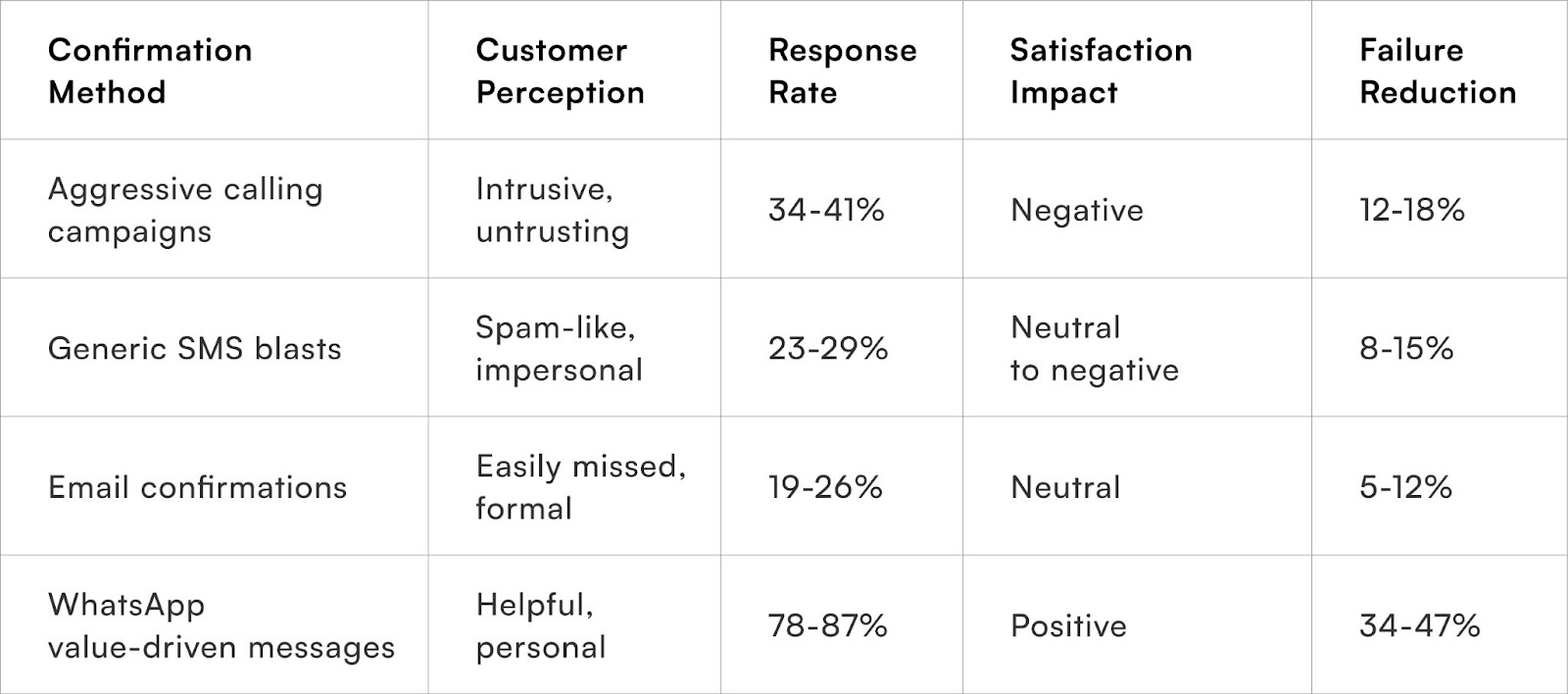
Your return management system data likely shows that customers with positive pre-delivery experiences also have lower return rates and higher satisfaction scores, indicating the compound value of excellent COD confirmation processes.
Cultural factors amplify confirmation sensitivity in Indian markets. Family consultation periods, gift purchase contexts, and privacy expectations around financial transactions all require nuanced confirmation approaches that generic automation can't handle effectively.
What Makes WhatsApp COD Automation Actually Work?
Value-driven conversations rather than verification interrogations create effective COD confirmation systems.
Build WhatsApp sequences that provide useful information whilst confirming purchase intent. Share delivery updates, product care instructions, usage tips, or complementary recommendations rather than just asking "Do you still want this order?"
Effective COD automation feels like helpful customer service rather than suspicious verification.
Here's how intelligent WhatsApp COD automation transforms customer relationships:
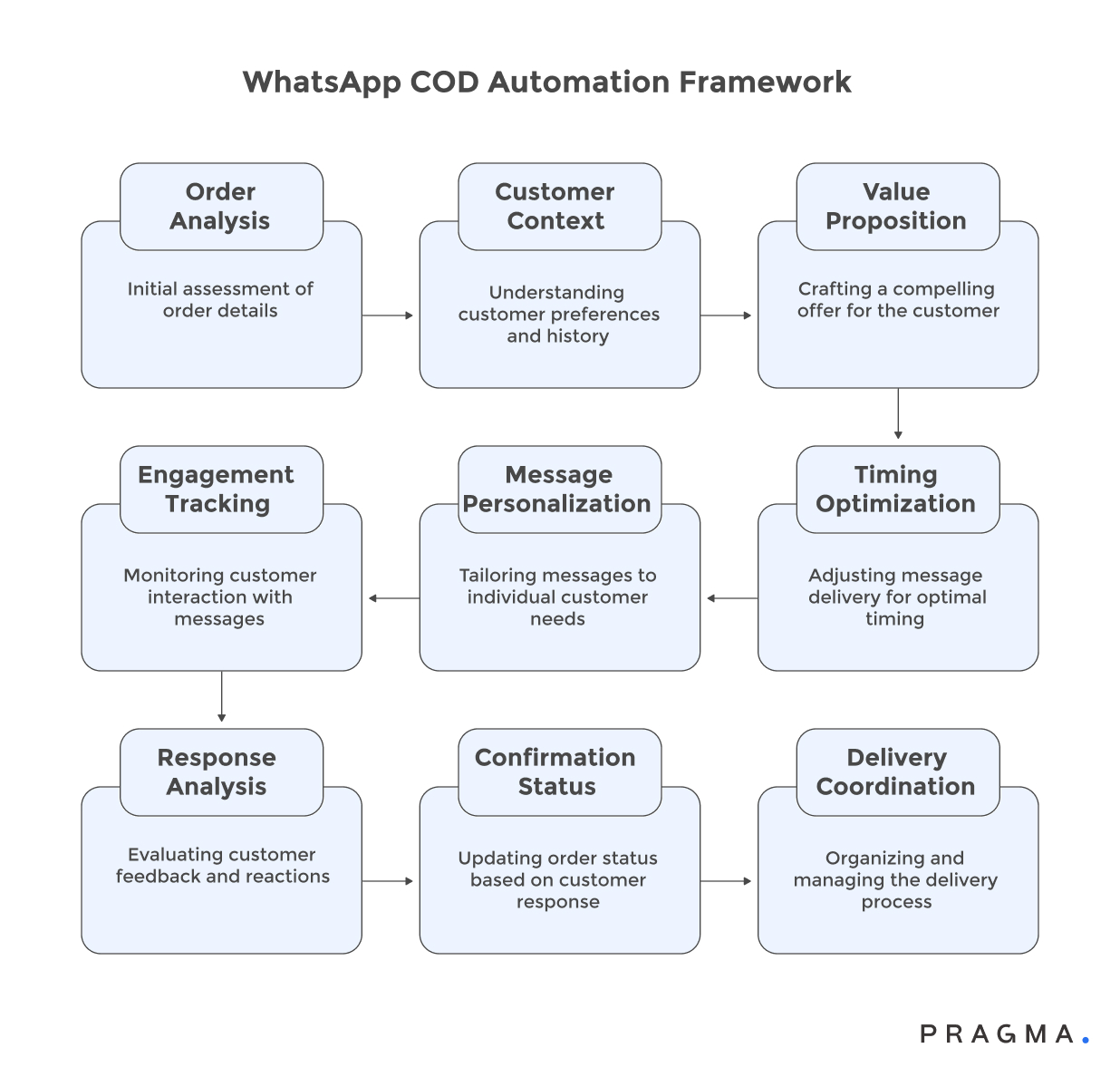
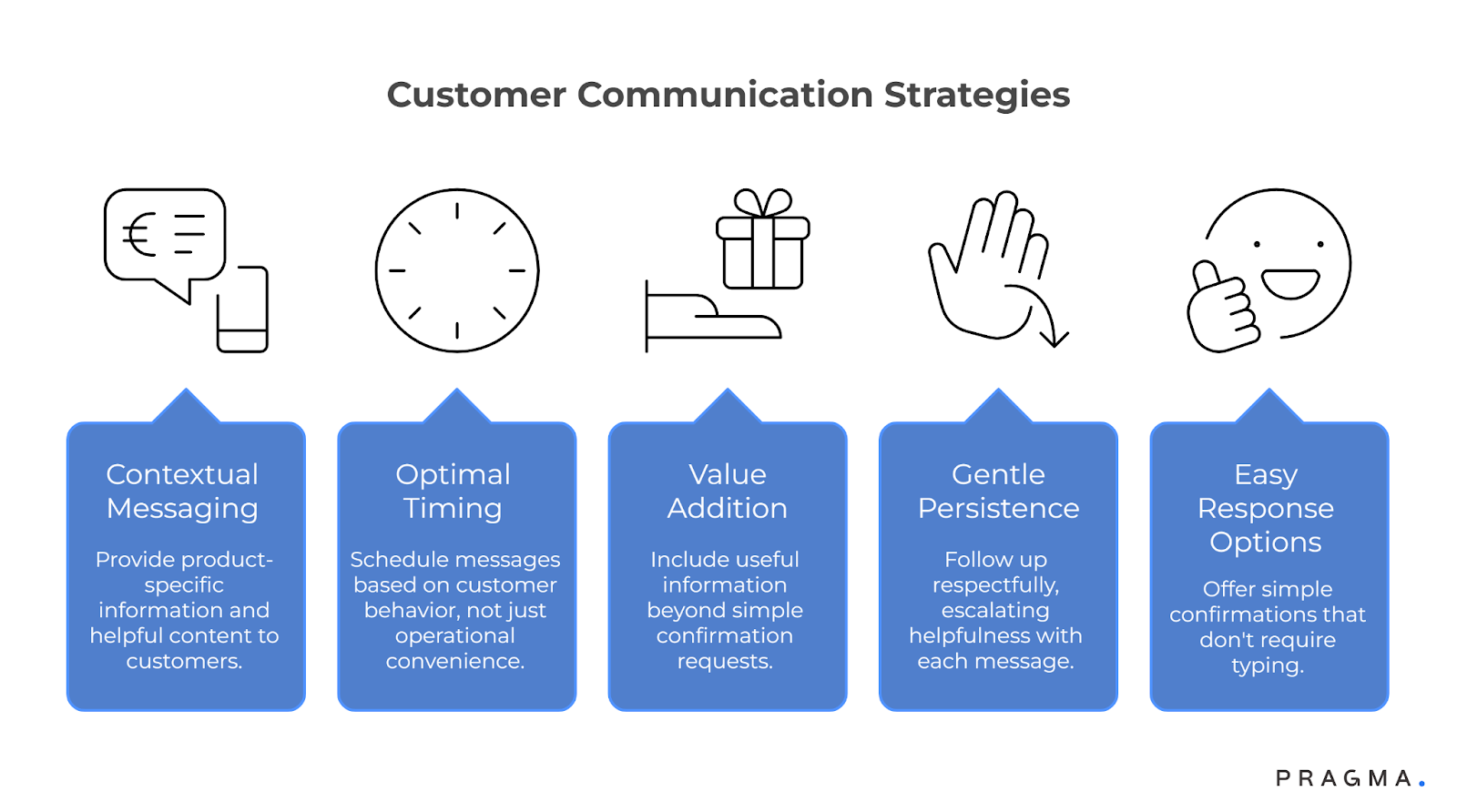
Essential elements for customer-friendly COD automation:
- Contextual Messaging (product-specific information and helpful content)
- Optimal Timing (customer behaviour-based scheduling rather than operational convenience)
- Value Addition (useful information beyond just confirmation requests)
- Gentle Persistence (respectful follow-ups that escalate helpfulness)
- Easy Response Options (simple confirmations that don't require typing)
Real example from a Mumbai-based skincare brand: Instead of "Confirm your COD order," they send: "Hi! Your anti-aging serum arrives tomorrow. Here's a quick video on the best application technique for maximum results. Just reply ✓ if you'll be available for delivery 📦"
This approach achieved 84% response rates compared to 31% for generic confirmation messages, whilst improving customer satisfaction scores by 23 points.
Your customer journey management should integrate COD confirmation as relationship-building touchpoints rather than isolated verification tasks that interrupt customer experience.
WhatsApp COD Automation vs IVR/SMS: What Works Better?
Brands often use multiple channels for COD confirmation, including IVR calls, SMS, and WhatsApp. However, their effectiveness varies significantly.
SMS messages are easy to send but often lack engagement. They feel generic and are easy to ignore, especially when they do not provide value.
IVR calls can capture attention but are often seen as intrusive. Many customers avoid unknown calls or disconnect automated voice systems quickly.
WhatsApp, on the other hand, offers a more balanced and effective approach. Messages are conversational, easy to read, and allow quick responses with a single tap.
In terms of performance:
- SMS typically sees lower response rates due to a lack of interaction
- IVR has a moderate response but high drop-off due to inconvenience
- WhatsApp delivers the highest engagement because of its familiarity and ease of use
The key advantage of WhatsApp is that it combines visibility, interactivity, and personalisation in one channel.
For most D2C brands in India, WhatsApp automation outperforms both SMS and IVR in confirmation rates and customer satisfaction.
How Do You Time COD Confirmations for Maximum Response?
Customer behaviour patterns rather than operational schedules should determine confirmation timing for optimal engagement.
Analyse your customer data to identify when different segments are most likely to engage with WhatsApp messages. Working professionals respond better in evenings, students during afternoon breaks, homemakers during mid-morning periods after household routines.
Timing optimisation requires customer segment analysis rather than one-size-fits-all scheduling.
Customer engagement timing framework for COD confirmations:
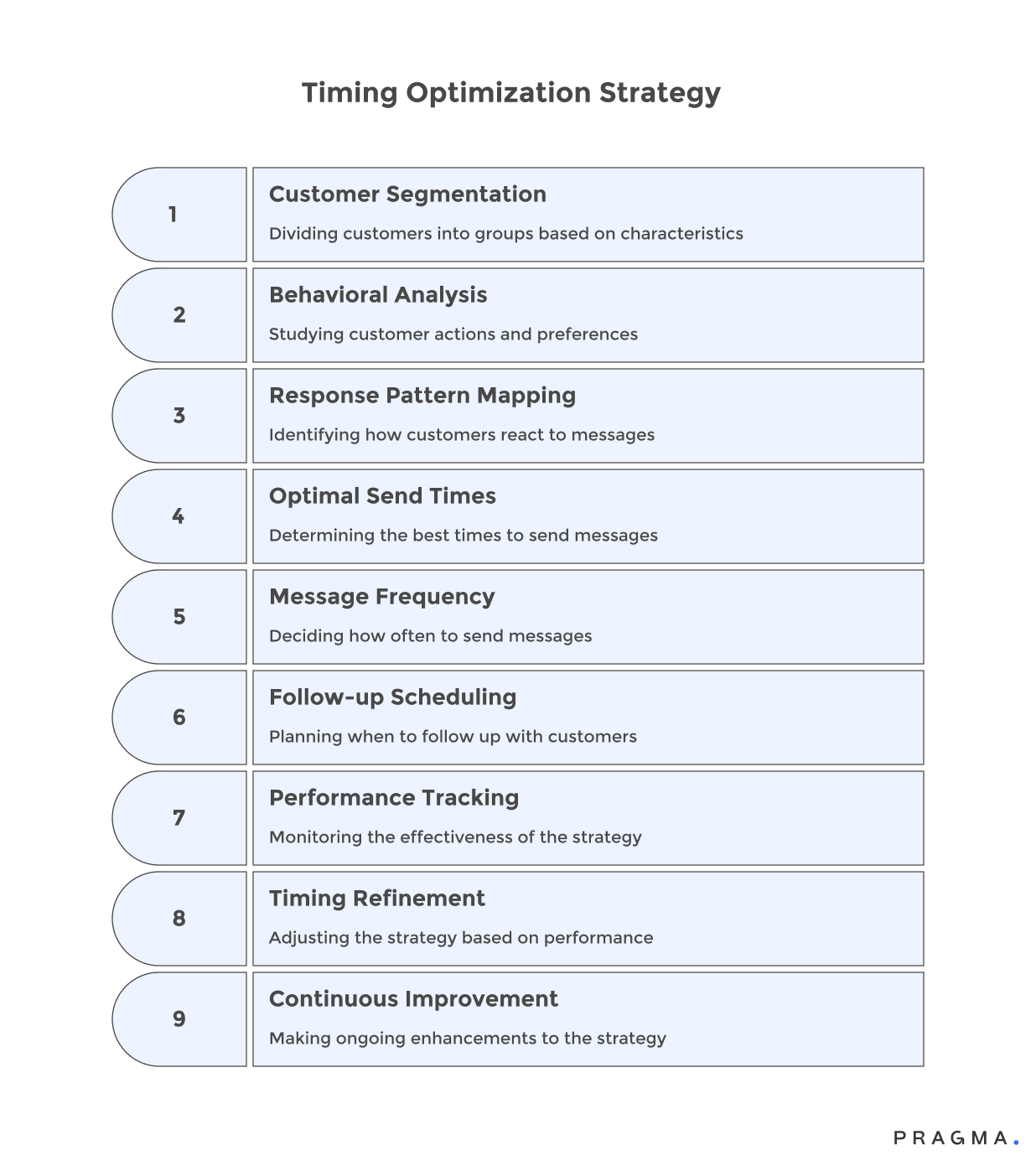
Response rate analysis by customer segment and timing:

Consider regional and cultural timing factors. Festival periods affect response patterns, regional holidays impact availability, and local customs influence communication preferences across different Indian markets.
Build dynamic timing systems that learn from customer response patterns and adjust automatically. If customers consistently respond better at certain times, your system should adapt confirmation scheduling accordingly.
Your WhatsApp automation platform should include intelligent timing features that optimise send times based on individual customer behaviour rather than broad demographic assumptions.
Which Message Formats Drive Highest Confirmation Rates?
Conversational, value-driven messages consistently outperform formal verification requests across all customer segments.
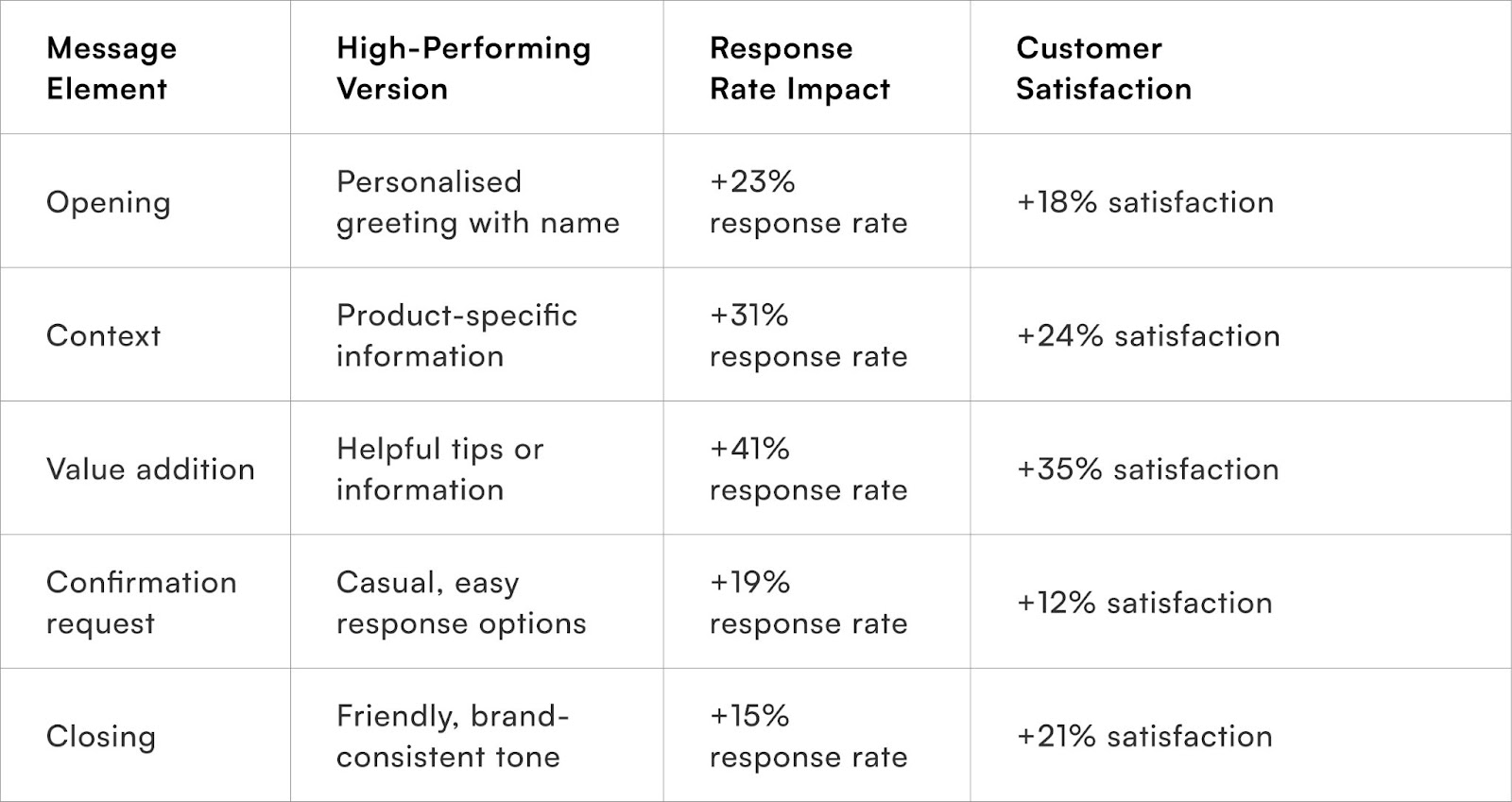
Structure messages as helpful updates rather than confirmation demands. Lead with value (delivery information, product tips, care instructions) and include confirmation requests as natural conversation elements rather than primary objectives.
Message format testing shows that value-first approaches achieve 2.3x higher response rates than confirmation-first messages.
High-performing message format analysis:

Message component optimisation data:
Real example from a Bangalore-based electronics brand: They tested multiple message formats for headphone deliveries:
Low-performing:
"Please confirm COD order delivery for tomorrow"
High-performing:
"Your new headphones arrive tomorrow! 🎧
Pro tip: The first charge should be 3+ hours for best battery life. Just reply ✓ if you'll be home for delivery!"
The value-driven approach achieved 89% confirmation rates versus 41% for the generic version.
Your customer service optimisation improves when COD confirmations feel like helpful service rather than administrative tasks that customers must complete.
Real WhatsApp COD Confirmation Message Templates That Work
Using the right message format can make a big difference in confirmation rates. Below are simple templates that combine clarity, value, and ease of response.
1. Basic Value + Confirmation Message
“Hi! Your order will be delivered tomorrow
We’re excited for you to receive it. Just reply ✓ if you’ll be available.”
2. Product Tip + Confirmation
“Your new skincare product arrives tomorrow
Tip: Use it at night for best results.
Reply ✓ to confirm your availability.”
3. Friendly and Conversational
“Hey! Your order is almost there
Will you be available to receive it tomorrow? Just reply YES.”
4. Urgency-Based Reminder
“Your order is scheduled for delivery today
Please confirm availability by replying ✓ to avoid delay.”
5. Premium Experience Message
“Thank you for your order
Your delivery is arriving tomorrow. Let us know if the timing works for you.”
These templates work because they feel helpful, polite, and easy to respond to. Customers are more likely to engage when messages provide value instead of just asking for confirmation.
How Do You Handle Non-Responsive COD Customers?
Progressive engagement escalation that increases value rather than pressure creates better outcomes for unresponsive customers.
Build follow-up sequences that provide additional value with each interaction. If customers don't respond to initial confirmations, send complementary information, usage guides, or exclusive offers rather than repeating the same confirmation request.
Non-responsive customers often indicate engagement problems rather than purchase intent issues.

Consider alternative engagement channels for persistently non-responsive customers. Some customers prefer voice calls over messages, others respond better to email, and some require different timing approaches entirely.
Build intelligent systems that identify non-response patterns and adjust engagement strategies automatically. Customers who consistently don't respond to WhatsApp might be better served through different confirmation methods.
Your customer analytics system should track response patterns to optimise future confirmation strategies and identify customers who require specialised engagement approaches.
Advanced COD Confirmation Strategies
Personalisation Engines for COD Messaging
Build dynamic personalisation that adapts message content based on customer history, product categories, and behavioural patterns rather than generic templating.
Implement AI-powered content selection that chooses optimal message elements for each customer. High-value customers receive premium service language, first-time buyers get educational content, repeat customers see loyalty appreciation messages.
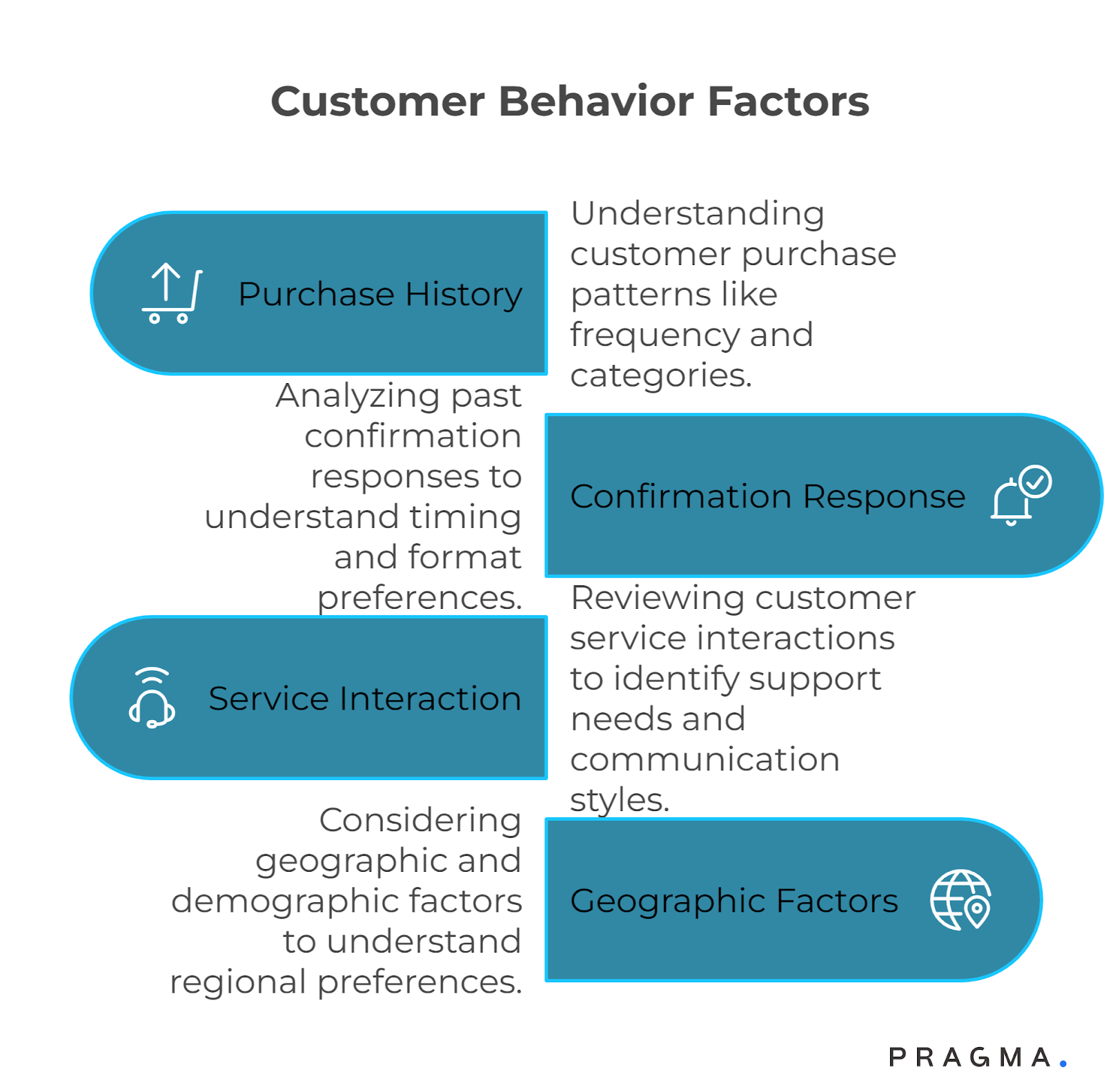
Your personalisation engine should consider:
- Purchase history patterns (frequency, categories, seasonal behaviour)
- Previous confirmation response behaviour (timing preferences, message format preferences)
- Customer service interaction history (support needs, communication style preferences)
- Geographic and demographic factors (regional preferences, cultural considerations)
Risk-Based Confirmation Intensity
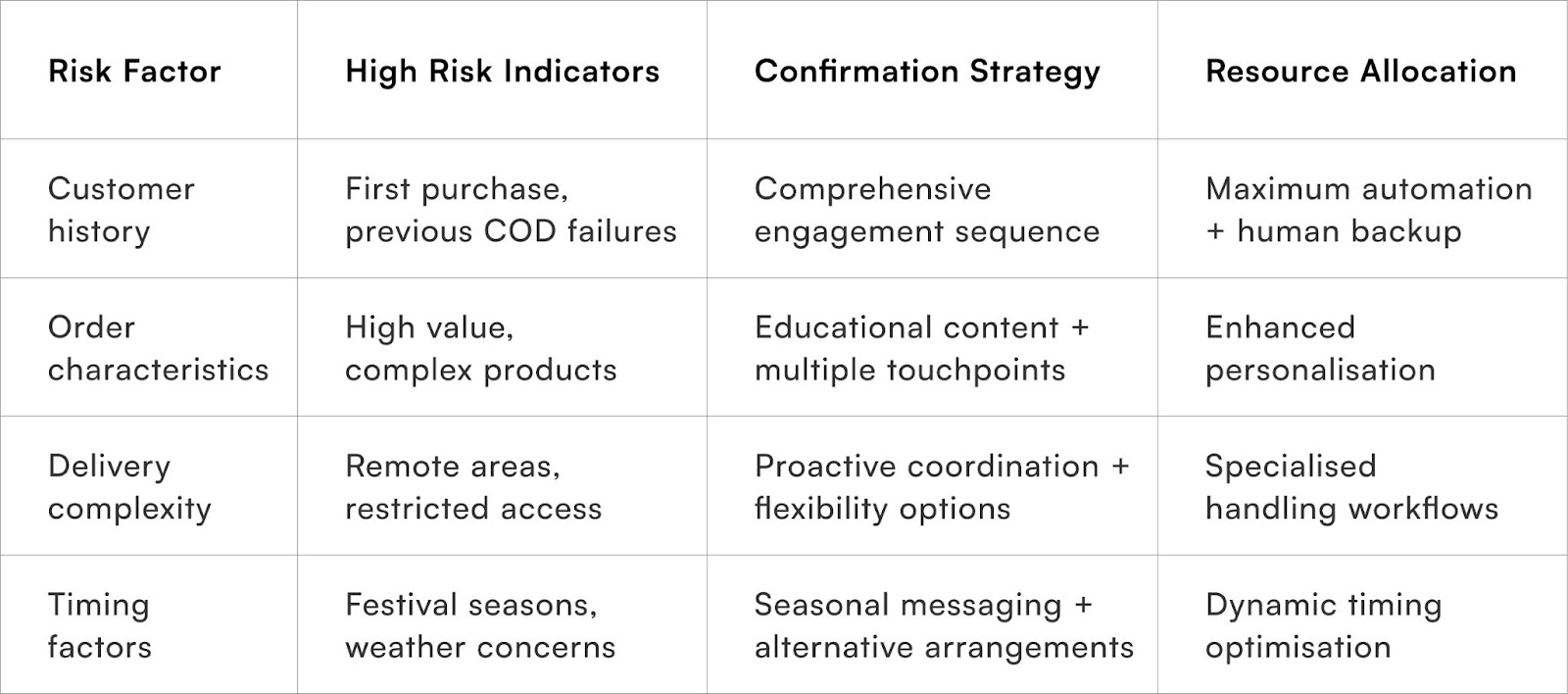
Not all COD orders require the same confirmation intensity—build risk assessment systems that allocate confirmation resources based on failure probability.
High-risk orders (first-time customers, high-value items, difficult delivery areas) receive comprehensive confirmation sequences, whilst low-risk orders (repeat customers, standard products, easy delivery zones) get streamlined processes.
Risk factor analysis for COD confirmation intensity:
Step-by-Step Workflow for WhatsApp COD Automation
Implementing WhatsApp COD automation your team or customers
Multi-Stage Confirmation Workflows
Design confirmation workflows that adapt to customer response patterns and engagement levels rather than following rigid sequences.
Build branching logic that personalises follow-up approaches based on customer behaviour. Engaged customers receive appreciation and smooth delivery coordination. Hesitant customers get additional value and gentle reassurance. Non-responsive customers trigger alternative engagement strategies.
Integration with Customer Service Systems
Connect WhatsApp COD automation with your broader customer service infrastructure to provide seamless support when customers have questions or concerns during confirmation processes.
Ensure your team can see confirmation interaction history when customers contact support, providing context that improves service quality and resolution efficiency.
Key Metrics to Track for COD Automation Success
Tracking the right metrics helps brands understand the effectiveness of their COD automation strategy.
One of the most important metrics is the COD confirmation rate, which shows how many customers confirm their orders before delivery.
Another key metric is delivery success rate. A higher success rate indicates that confirmations are translating into actual deliveries.
Return-to-origin (RTO) rate is also critical. A reduction in RTO directly reflects better confirmation and customer intent.
Response rate measures how many customers reply to WhatsApp messages. This helps evaluate message quality and timing.
It is also useful to track the time taken for customers to respond. Faster responses indicate better engagement and effective timing.
Finally, customer satisfaction and repeat purchase behaviour should be monitored to understand the long-term impact of your communication strategy.
Regularly analysing these metrics allows brands to refine their approach and continuously improve results.
To Wrap It Up
Apply intelligent COD confirmation consistently—personalise messages with product value, optimise timing for customer segments, and escalate engagement helpfully rather than aggressively. Start with value-first messaging and behavioural timing, then build sophisticated personalisation as you gather customer response data.
Build COD confirmation as a relationship opportunity, not a verification burden. When you help customers while confirming orders, you create positive touchpoints that drive loyalty, reduce failures, and establish trust that supports long-term business growth.
And Pragma is here for all D2C brands, making intelligent COD automation simpler and more effective with WhatsApp systems that balance confirmation efficiency with customer experience excellence and relationship building.

FAQs (Frequently Asked Questions On Smart WhatsApp COD Automation That Boosts Delivery Success)
1. How many WhatsApp messages can we send for COD confirmation without violating spam policies?
WhatsApp allows up to 3-4 messages per order for legitimate business purposes, but focus on value-driven content rather than frequency—customers report spam based on message quality, not quantity.
2. Should we offer alternatives if customers can't receive COD deliveries?
Always provide flexible options like rescheduling, alternative addresses, or payment method changes—this converts 60-70% of potential COD failures into successful deliveries.
3. What's the ideal time gap between COD confirmation messages?
Send initial confirmation 24 hours before delivery, follow up after 12-18 hours of no response, then final attempt 4-6 hours before delivery—avoid multiple messages within 6-hour windows.
4. How do we handle customers who confirm but still refuse COD deliveries?
Implement gentle education about COD commitments and offer easy alternatives like prepaid conversion with small discounts—focus on relationship preservation over immediate conversion.
5. Can automated COD confirmation work for high-value orders above ₹10,000?
High-value orders benefit from hybrid approaches combining automated messaging with human follow-up—use WhatsApp automation for initial contact, then personal calls for final confirmation and relationship building
Talk to our experts for a customised solution that can maximise your sales funnel
Book a demo

.png)