

Earlier, if we talk about the supply chain management in the retail industry, it was just about taking the goods from the manufacturer and selling them to the customers.
But now, retail supply chain management is a set of many interconnected points that is to be handled in an efficient manner to get the best out of everything.
If you are a business owner wondering what is ‘retail supply chain management’, this guide will help you learn about "Retail Supply Chain Management: Meaning, Components, and Challenges in E-commerce."
What Is Retail Supply Chain Management?
Before getting into the topic, let us clarify what the retail supply chain is.
What is Retail Supply Chain?
As the name implies, the supply chain is the flow of all the activities that are involved in supplying the products from the manufacturer to the final consumers.
It includes steps like procurement, manufacturing, inventory management, order fulfilment, warehousing, logistics and even returns.
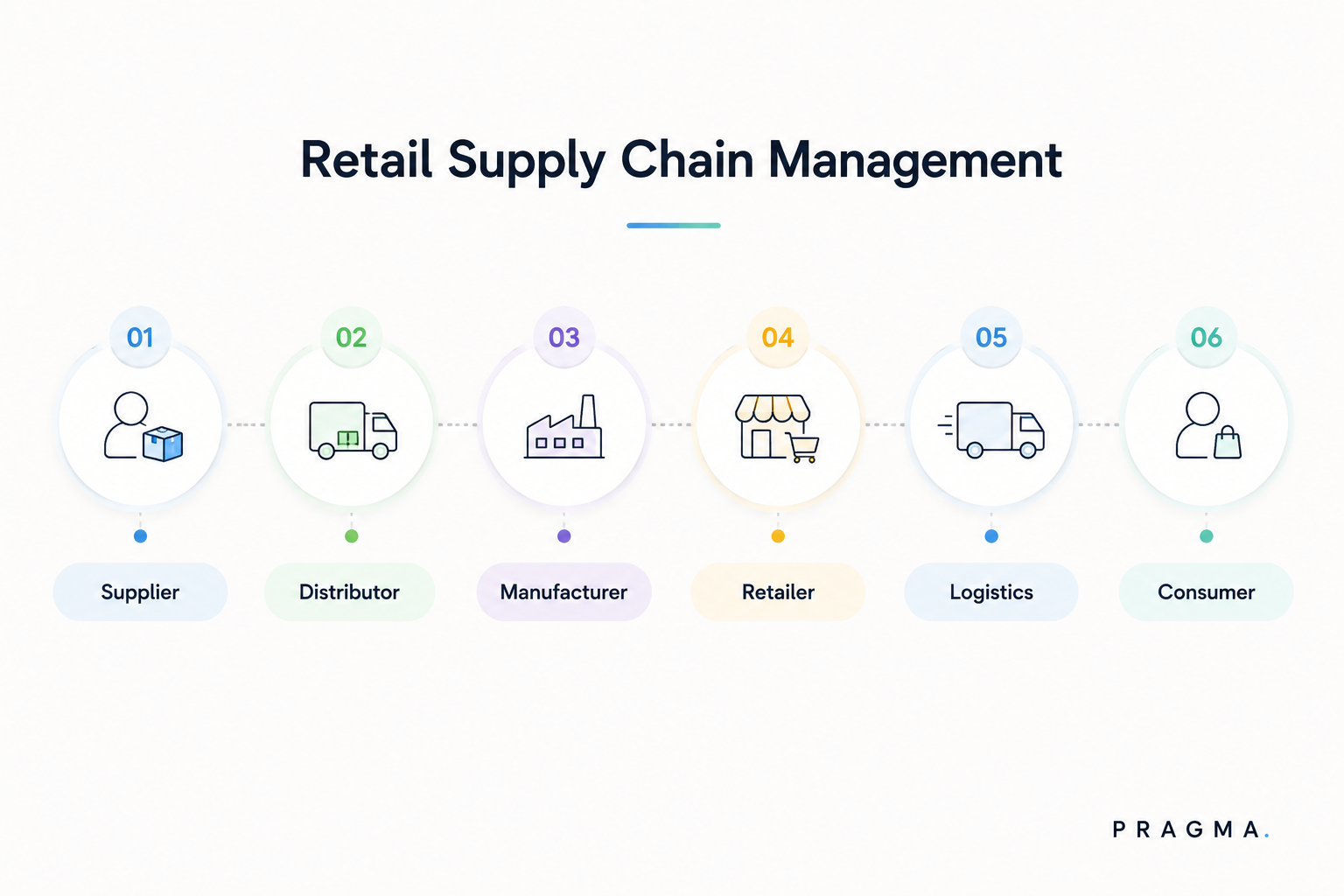
And when we are answering, what is retail supply chain management, it means that we are talking about how all the things or processes that are covered under retail supply chain are managed by the business.
This management includes handling the flow of goods, information, and money across your entire business network.
And in the retail industry, supply chain management is very important, as according to a report by the Ministry of Commerce and Industry, India's retail sector contributes approximately 10% to the country's GDP and employs over 40 million people.
What Is Retail Supply Chain Management for E-commerce Brands?
Before the existence of e-commerce businesses, there was a traditional way of selling goods to customers. The products are sold through the help of physical stores.
At that time, one of the major tasks involved in retail supply chain management was just taking up products or raw materials from manufacturers, processing them, and delivering them to physical stores, where customers would buy them.
But e-commerce retail supply chain management is completely different. It focuses on the complete journey of the product to meet the customer's order on time.
It works with individual shipments to their addresses, deals through multiple sales channels like websites, marketplaces and social media.
Why Retail Supply Chain Management Is Important in E-commerce?
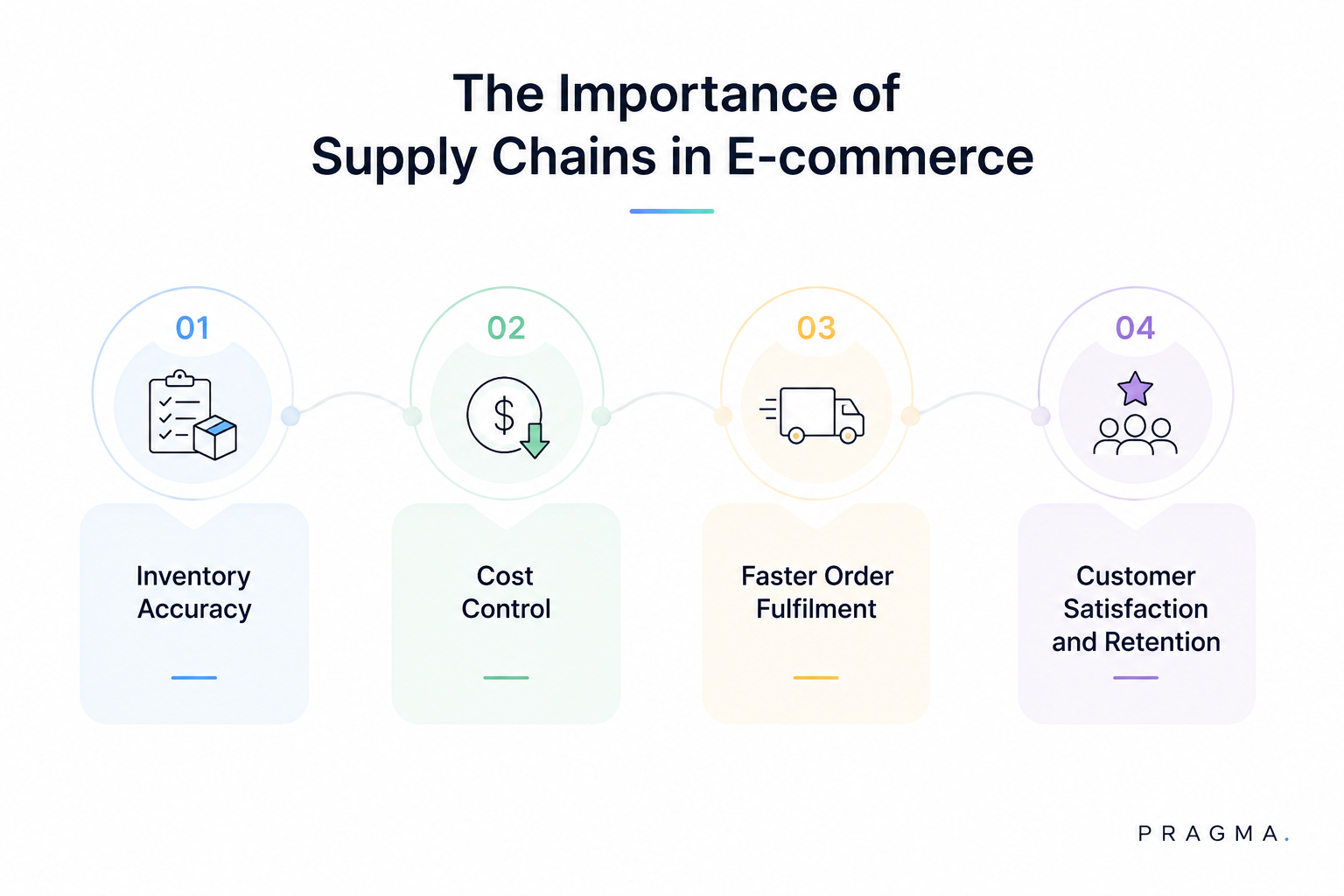
Here is why retail supply chain management is important in e-commerce:
Inventory Accuracy
If a business wants to operate smoothly, it must have an optimum level of inventory. Because if there are low stocks, they would not be able to fulfil the customer's orders, and if there are more stocks than needed, it would be difficult to handle and cost them a lot in storing too.
But with the proper supply chain management, businesses can solve the problem of understock and overstock.
Cost Control
Supply chain management allows controlling costs in various aspects:
- Storage expenses: With optimum inventory, warehousing expenses are minimised.
- Shipping cost: Businesses can save transportation costs by 10-15% by having a well-built logistics plan.
- Labour expenses: Labour is minimised by automation and improved work.
Faster Order Fulfilment
Of course, giving faster deliveries is one of the core things that every business wants to achieve. And with proper supply chain management, it is possible. Because that ensures orders are picked, packed, and delivered quickly.
Customer Satisfaction and Retention
As if you are running a business, you must be aware of how difficult it is for you to get a new customer. And not only is it difficult, but it also costs a lot. According to research, acquiring a new customer costs 5-25 times more than retaining an existing one.
Thus, it is very important for every business to keep its customers satisfied and happy. And with retail supply chain management, it is possible.
What are The Components of Retail Supply Chain Management?
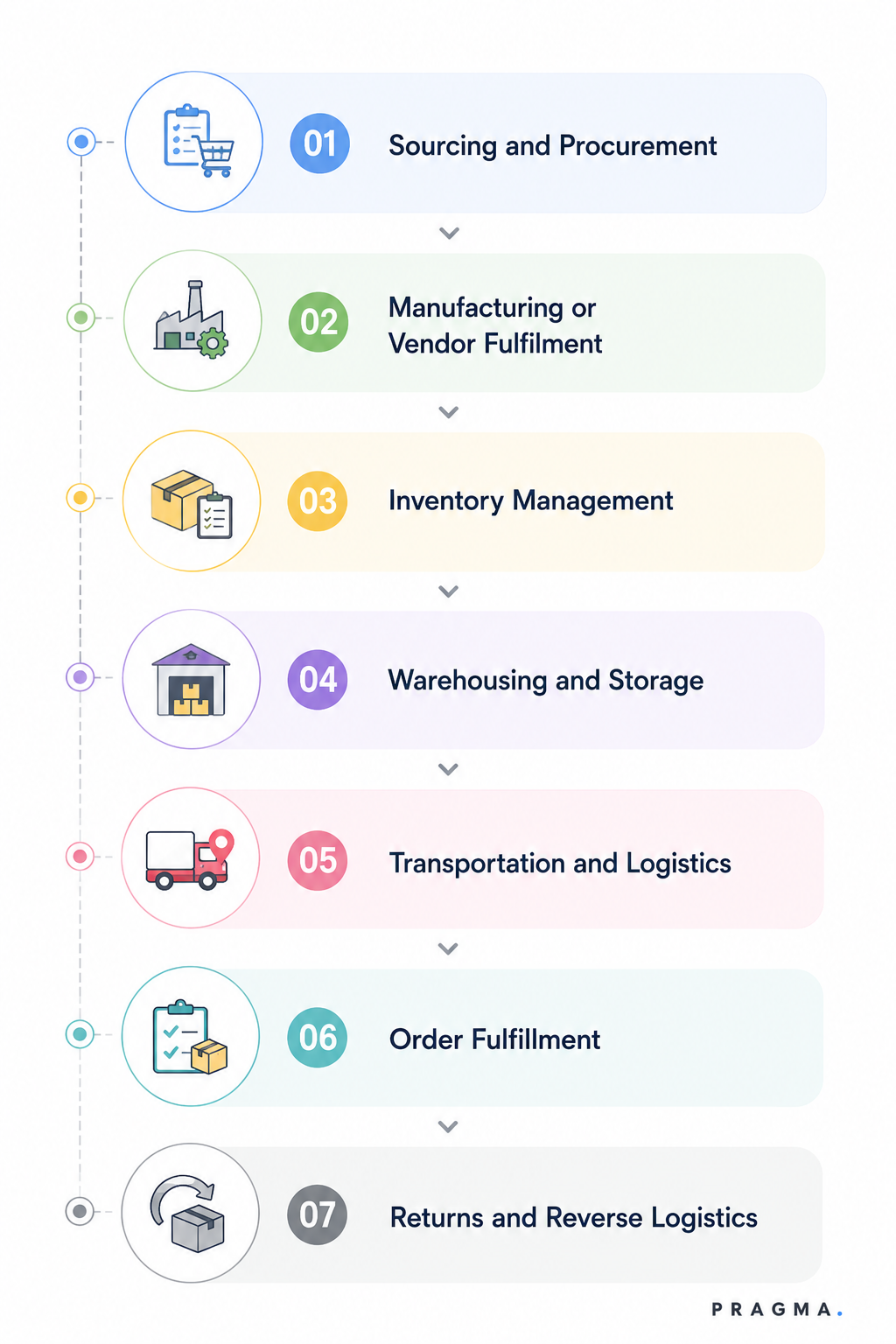
Sourcing and Procurement
This is the foremost step where the retail supply chain management process starts. It includes finding a reliable supplier who can:
- Deliver quality products in the amount needed
- Negotiate affordable prices and delivery terms
- Satisfy demand during prime seasons
Manufacturing or Vendor Fulfilment
There are many businesses operating in the market that do not manufacture on their own, but do manufacture from other vendors. That is why it is essential to have the following requirements:
This includes:
- Quality control processes
- Production scheduling and capacity planning
- Good vendor relationship management
Inventory Management
Once you have gathered the raw materials, your products are ready, or you have to get them manufactured from vendors.
The next stage is to include them in your inventory. And for proper levels of inventory, proper inventory management is required. This will ensure that you do not get stuck in overstocking, understocking, or dead inventories.
Warehousing and Storage
The next thing is that when you have your inventory for proper distribution of products, you will need warehouses.
It is the process of storing products in a safe and orderly manner in front of stores or the delivery of products to the customers. Proper warehousing assists retailers in keeping the stock in the proper place and prevents wastage of time.
When orders are made, the products can be picked, packed, and shipped within a short time. This can assist the retailers in delivering goods at the right time and according to the expectations of the customer.
Transportation and Logistics
Transportation and logistics are one of the important parts of retail SCM. It includes supplying goods to suppliers, to warehouses, from warehouses to stores, and finally to customers. This process makes sure that products are available at the appropriate location and at the appropriate time.
Good transportation planning in retail SCM is used to minimise delays in delivery and shipping prices. It involves selecting the ideal means of transport, route planning, and shipment tracking.
With proper transportation and logistics, retailers will be able to eliminate late delivery, minimise product damage, and increase customer satisfaction.
Order Fulfillment
This is the process of receiving, processing, and delivering customer orders. It includes:
- Order processing and verification
- Picking and packing products
- Shipping and tracking
- Customer communication throughout the process
Returns and Reverse Logistics
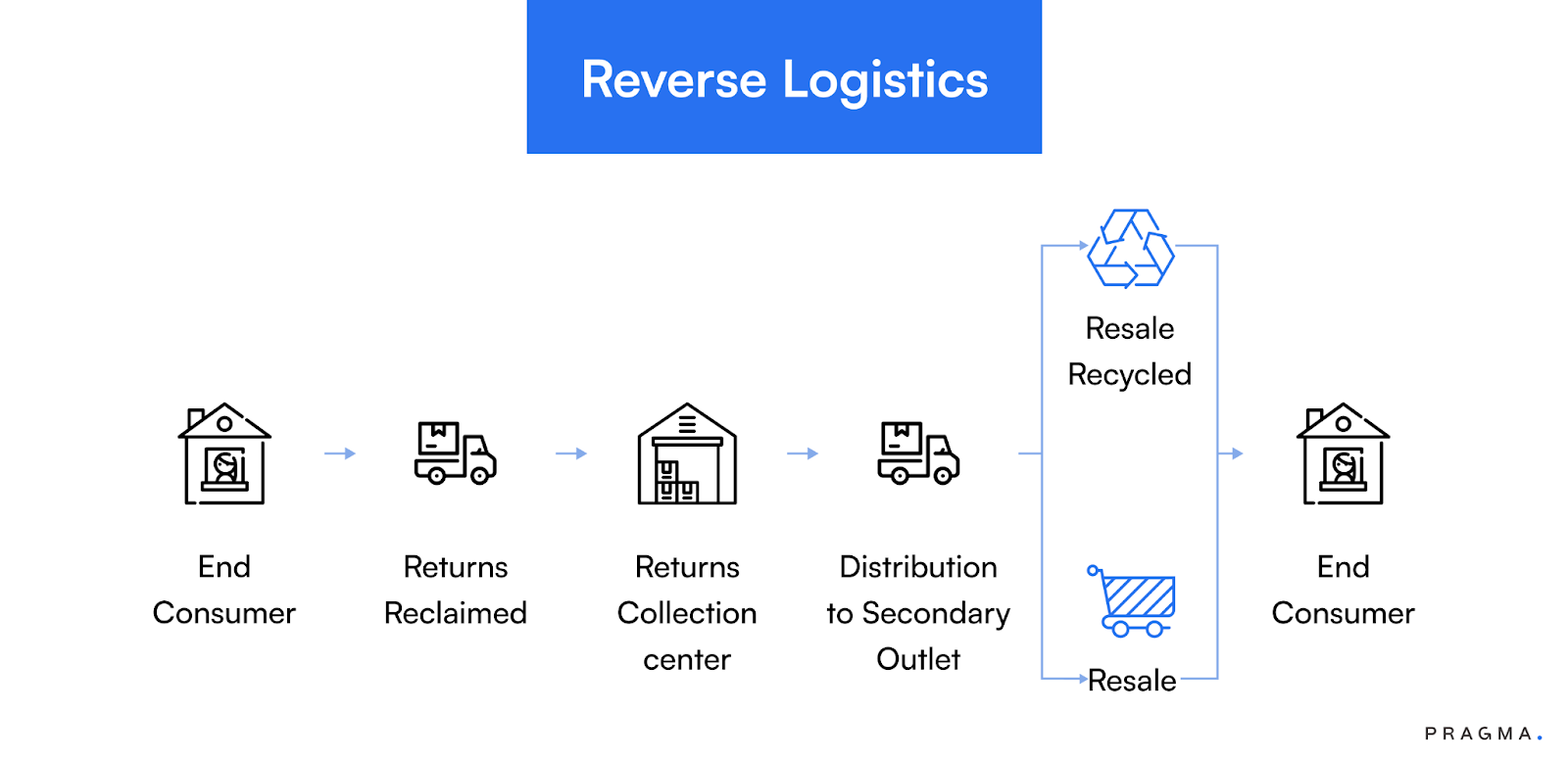
Managing returns in the right way is important for every business.
Here, you have to process returns, manage exchanges or refunds, or get the product back to the origin.
This reverse logistics is more difficult than the forward logistics, as the product has to be transferred from different locations, depending on their situation and the reason for return.
How Retail Supply Chain Management Works in India?
In India, retail supply chain management begins at the time of production of goods or purchasing and finishes at the point when the product is received by the customer.
Firstly, the products are stored in warehouses or distribution centres. At that point, they are shipped to the retail outlets or delivered to customers by delivery partners.
But in India, it is more complex in nature. There are many states and regions, and each one has different rules, languages, customer needs, and infrastructure.
Also, retailers have to deal with issues such as distance, traffic, demand in the regions, and cash-on-delivery orders.
But at the same time, the process of digital transformation increases the speed of growth of the retail supply chains. Services such as UPI are convenient for making payments.
What are The Challenges in Retail Supply Chain Management?
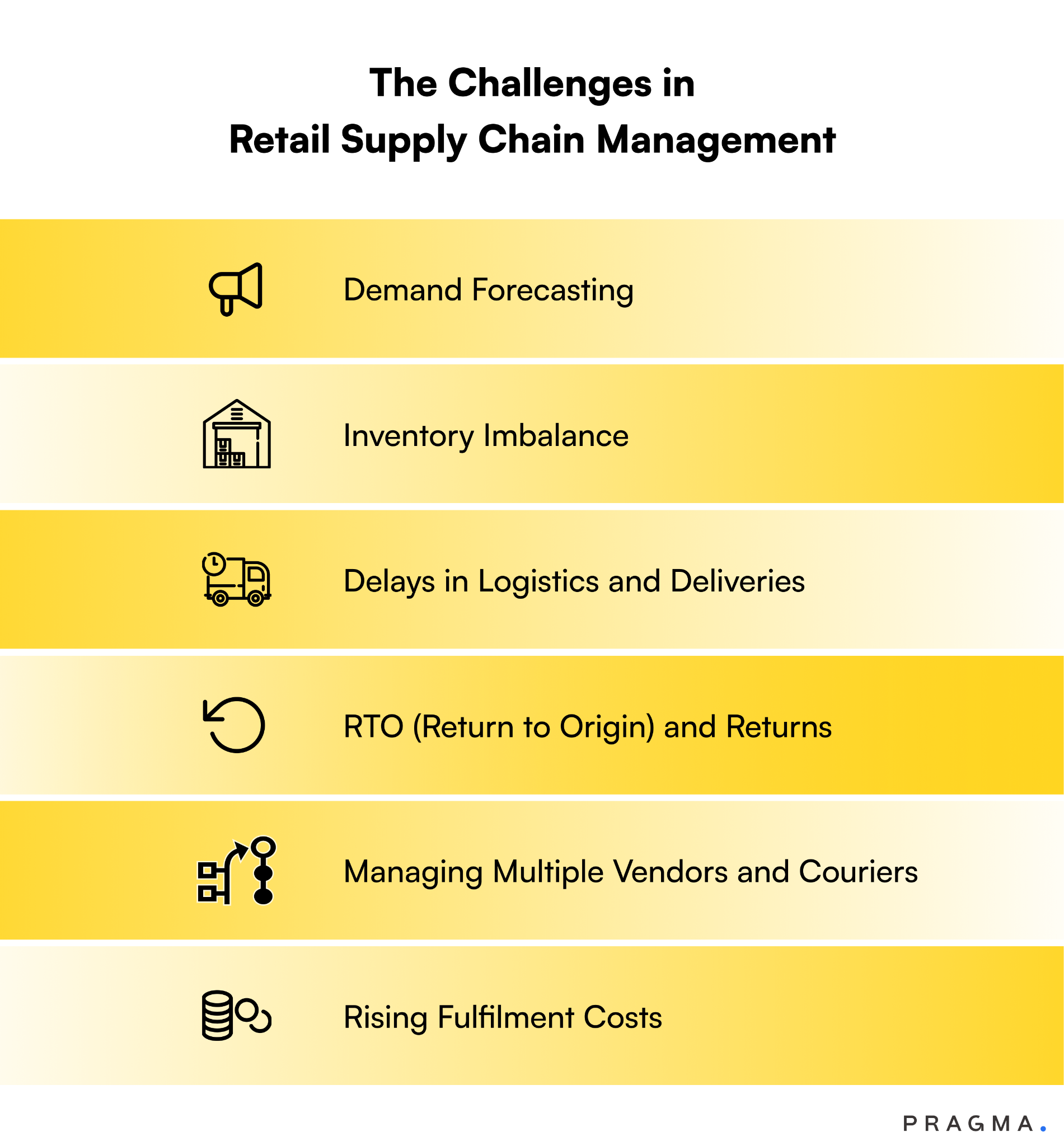
Demand Forecasting
Retailers should be able to determine the number of customers who will purchase in the future. But, this is not easy, as the customer demand fluctuates as a result of seasons, festivals, trends, discounts, and spontaneous market fluctuations.
According to FICCI's retail report, 60% of Indian retailers struggle with demand forecasting accuracy. In case of inaccuracies in forecasting, it may result in a shortage of stock or overstocking.
Inventory Imbalance
A common scenario that retailers tend to compete with is having excess inventory at certain stores or warehouses, yet no longer having items in others.
It is complicated to control the stock in various locations and multiple points of sale, and may either lose sales or incur higher expenses in storage.
Delays in Logistics and Deliveries
One of the other challenges in retail supply chain management is to deliver goods on time. In India, deliveries get late because of the traffic, road conditions, weather, or the delay by the couriers.
Delayed deliveries impact customer satisfaction and ruin the brand image. Because when the customers get late deliveries, they think that the brand is not efficient and good enough to make a purchase again with them.
RTO (Return to Origin) and Returns
A lot of retail orders are returned due to damaged goods, misdelivery, customer rejection, or cash on delivery. RTO control and returns management increase the cost of operation and strain inventory management.
Industry data suggests that e-commerce returns in India range from 15-40%, depending on the category. But with Pragma RTO Management Suite, businesses can reduce RTOs by 65%.
Managing Multiple Vendors and Couriers
A number of partners and logistics suppliers are involved in working with retailers because relying on a single vendor is not adequate to run a successful business.
But handling multiple vendors becomes one of the challenges in retail supply chain management. It takes coordination and systems to coordinate the orders, monitor the shipments, preserve quality, and solve the problems with various vendors and couriers.
Rising Fulfilment Costs
To fulfil a single order, a business has to pay many costs. The warehousing, packaging, transportation, labour, technology, and more. And these costs are rising continuously.
With the surge in these costs, profit margins of the business are lowered, causing retailers to fail in providing competitive prices.
Strategies to Improve Retail Supply Chain Management
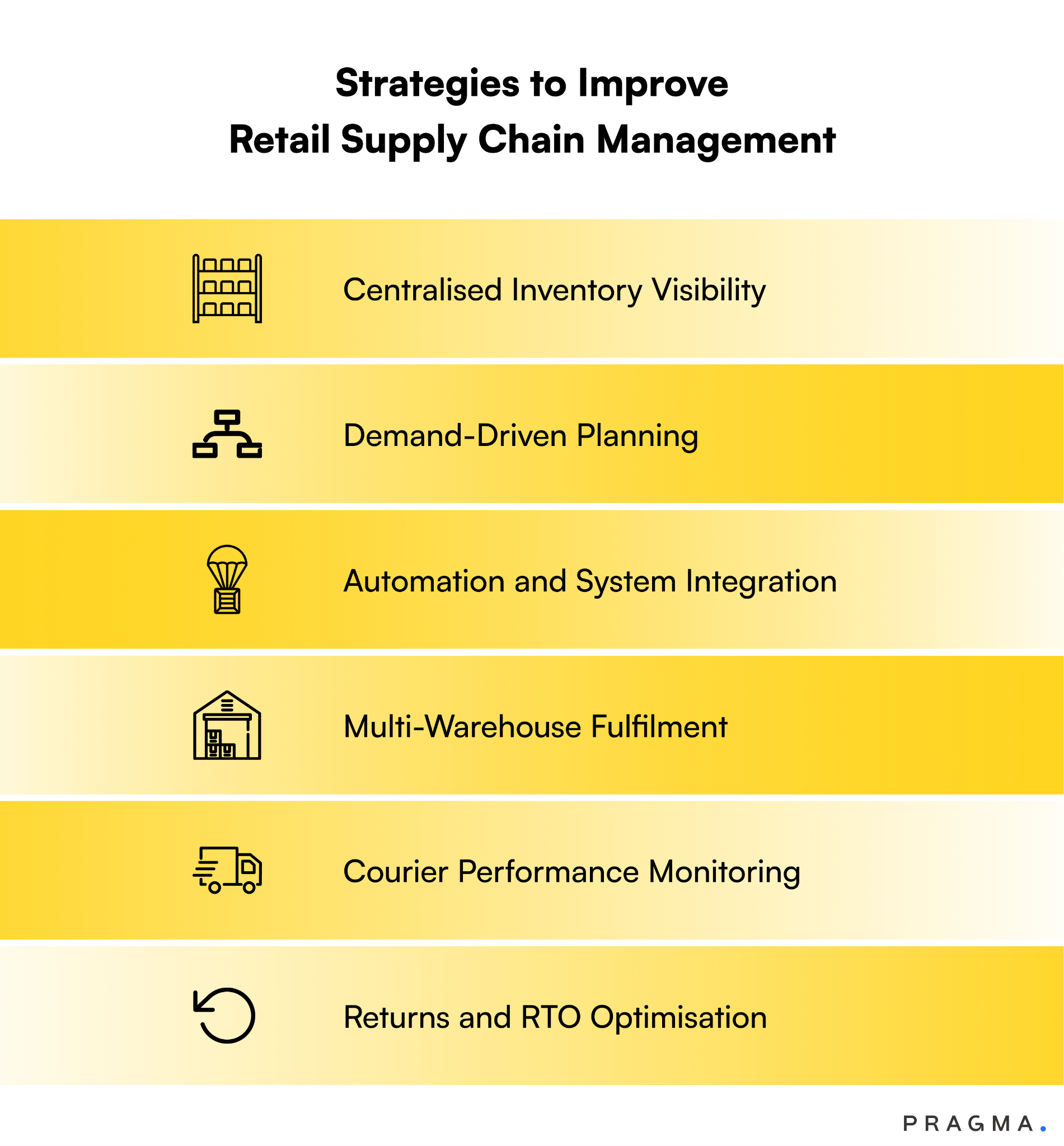
Here are some strategies that can help retail businesses to manage their supply chain:
Centralised Inventory Visibility
One system should be used by the retailers in order to view their entire stock in a single place. This covers both goods at warehouses, stores and during transit.
When retailers can see their full inventory on a single dashboard, they will be aware of the amount of stock available and its location.
This will save businesses from stock shortages or having plenty of stock that is not sold, and this saves money and customer satisfaction.
Demand-Driven Planning
Retailers should plan their inventory on the basis of customer demand; they should not make a guesswork there.
Retailers can know what and when to sell after observing the previous sales, seasonal, festivals, and trends.
This will assist them in ensuring that they place the correct amount of goods at the correct time to avoid wastage and avoid stock out.
Automation and System Integration
Automation is the idea of automatically performing routine work with the help of software and machines.
These systems are able to update the stock level, make orders and even come up with invoices without any manual work.
When businesses use all systems together, mistakes are minimised, work speed is increased, and the supply chain operates within a normal running.
Multi-Warehouse Fulfilment
Retailers should keep goods in various warehouses that are close to the customers rather than keeping all goods in a single warehouse. This assists in quick delivery and saves on transportation.
So, if one warehouse goes out of stock, the other warehouse can serve the order. This will help the businesses to fulfil their orders on time, without any failures.
Courier Performance Monitoring
Retailers should have a look at how their delivery partners are working. This involves monitoring timely deliveries, those that have been delayed, damaged and failed deliveries.
Tracking the courier performance will allow retailers to detect issues and enhance the performance of the service, as well as select the most suitable partners in terms of delivery to the business.
Returns and RTO Optimisation
Return-to-Origin (RTO) and Return increase the costs. To mitigate this, the retailers should focus on product quality, proper description of products and communication with customers before delivery.
Failed deliveries can also be reduced by confirming orders, conducting better packaging and using dependable couriers. Return management is effective in saving money and ensuring that the supply chain remains efficient.
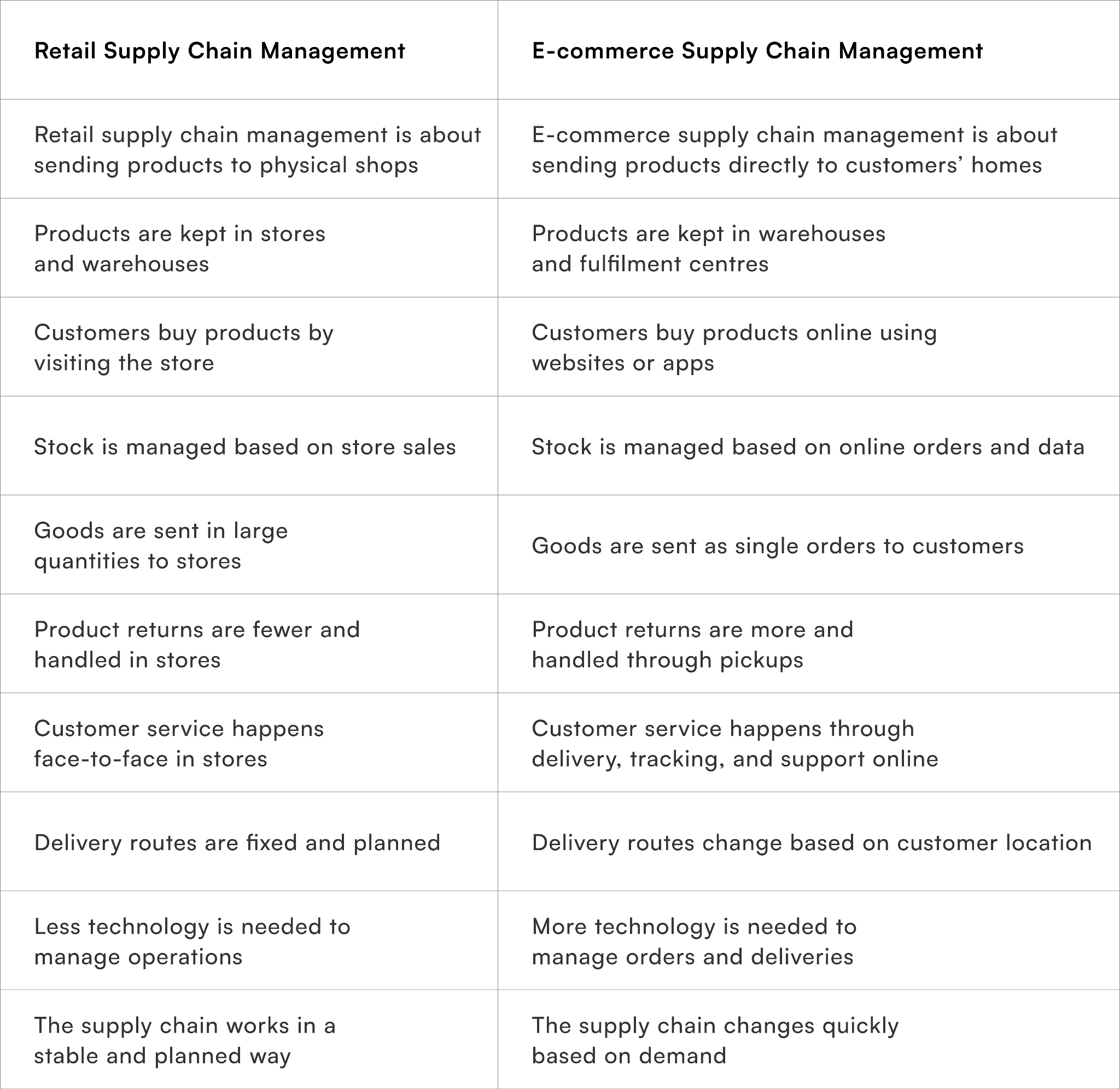
Retail Supply Chain Management vs. E-commerce Supply Chain
The Role of Technology in Modern Retail Supply Chains
Technology assists retail businesses to work smarter, better, and faster. It ensures there is a smooth flow of products between the factory, the store, and the customer. Here is how technology helps:
- It assists the retailers in understanding what is selling and what is not selling.
- It assists in maintaining the appropriate quantity of stock and prevents excess stock and minimal inventory.
- Products in warehouses and stores can be tracked with the help of computers and software.
- It assists retailers in making orders without the need to call the supplier when the stock is low.
- GPS and tracking have assisted in knowing the location of goods during transit.
- It assists in quicker billing, payments, and electronic transactions.
- The retailers are supported by online systems to easily run suppliers and delivery partners.
- The retailers can make improved business decisions through data and reports.
What is the Future of Retail Supply Chain Management in India?
The Indian retail supply chain management will be more progressive, quicker, and technologically driven in the future.
As online shopping becomes popular and customers become more demanding, retailers will target faster delivery and increased product stocks.
Technology will help the business in controlling inventory, warehouses, and the arrangement of deliveries. There will be more local warehouses and fulfilment centres that will be nearer to the customers to achieve shorter delivery times.
Retailers will also be more concerned about cost control and environmentally friendly issues, such as minimising waste and adopting improved means of transportation.
To Wrap It Up
So, to conclude here, we want to say that retail supply chain management nowadays is not only about selling the products, but it is also related to fulfilling the demand of customers quickly, and keeping them happy and satisfied.
For this, businesses should adopt the right strategies in order to tackle the challenges in retail supply chain management that come their way, with proper management, through the help of automated systems.
And to solve the unique challenges of Indian brands, Pragma is here to help by providing end-to-end solutions.

FAQs (Frequently Asked Questions On Retail Supply Chain Management: Meaning, Components, and Challenges in E-commerce)
1. What is retail supply chain management in e-commerce?
Retail supply chain management in e-commerce refers to planning, controlling, and optimising the flow of goods from suppliers to warehouses, fulfilment centres, and finally to customers, including returns.
2. How is retail supply chain management different from general supply chain management?
Retail supply chain management focuses specifically on consumer-facing operations such as inventory availability, fulfilment speed, last-mile delivery, and returns, whereas general supply chain management may include B2B or manufacturing-heavy workflows.
3. What are the key components of a retail supply chain in e-commerce?
Core components include supplier sourcing, demand forecasting, inventory management, warehousing, order fulfilment, logistics, last-mile delivery, returns management, and data visibility.
4. Why is retail supply chain management critical for e-commerce brands?
Because it directly affects product availability, delivery speed, order accuracy, returns handling, and customer experience, all of which influence repeat purchases and profitability.
5. What are the biggest retail supply chain challenges in e-commerce?
Common challenges include demand forecasting errors, inventory imbalance, high logistics costs, delivery delays, Return to Origin (RTO), high return rates, and lack of real-time visibility.
6. How does inventory management impact retail supply chains?
Poor inventory management leads to stockouts, overselling, cancellations, and excess holding costs. Accurate, real-time inventory is essential for smooth retail supply chain operations.
7. How do returns affect the retail supply chain?
Returns increase reverse logistics costs, slow inventory turnover, add warehouse workload, and complicate planning, making returns management a critical part of retail supply chains.
8. What role does technology play in retail supply chain management?
Technology enables automation, real-time tracking, demand forecasting, and integration across inventory, fulfilment, logistics, returns, and customer communication systems.
9. How can e-commerce brands optimise their retail supply chain?
Brands optimise their retail supply chain by improving demand planning, enabling real-time inventory visibility, using multi-warehouse fulfilment, automating logistics workflows, and tracking operational KPIs closely.
10. What trends are shaping retail supply chain management in e-commerce?
Key trends include faster delivery expectations, increased automation, predictive demand forecasting, integrated returns workflows, and closer alignment between operations and customer experience.
Talk to our experts for a customised solution that can maximise your sales funnel
Book a demo.webp)

.png)
.png)