

Most D2C brands apply broad policies for payments and carriers: one logistics partner per city, COD on by default, and blanket SLAs. These global rules are easy to manage but expensive in outcome. In India, delivery performance, COD acceptance and fraud risk vary dramatically at the pincode level sometimes within the same postal zone and a single policy hides these differences.
Pincode-level mitigation: rules to auto-switch carriers or disable COD argues for turning checkout and dispatch decisions into localised, data-driven policies. By automatically switching carriers or disabling COD for specific pincodes and cart profiles, teams reduce RTO, lower delivery costs and protect margin without permanently blocking customers.
The practical challenge is designing rules that are explainable, reversible and measurable not just reactive patches. This post lays out a robust, operational framework to do exactly that.
Why pincode-level actions beat blanket policies
Local failure modes are the real driver of cost
Two customers in the same city often have wildly different delivery experiences because of micro-geography: gated colonies, apartment towers, narrow lanes, or areas with high refusal rates. When a brand treats both customers the same, the cost of making a wrong operational choice compounds across attempts, retries and returns.
Pincode-level mitigation lets you codify the local reality. Instead of adding riders or extra checks everywhere, you design interventions where they matter. This reduces unnecessary friction for reliable areas and applies protective measures where risk — financial or operational — is proven. The net effect is cleaner routing, fewer RTOs, and lower operational variability.
What signals should govern pincode mitigation rules?
Focus on a compact, high-signal set rather than every metric you can capture
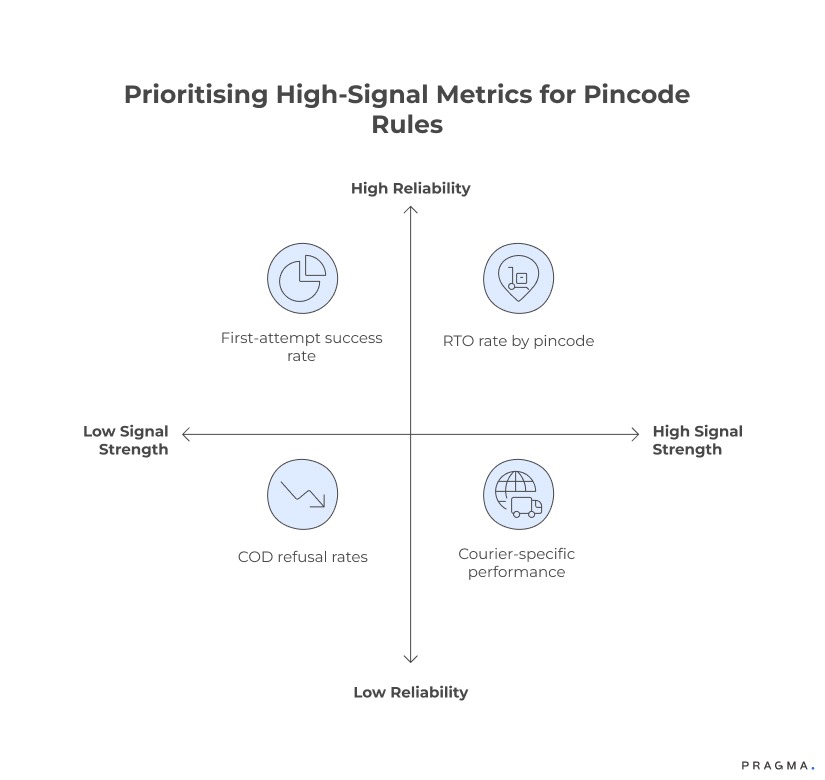
Rule design starts with choosing which signals actually predict failure. Too many inputs create brittle rules; too few and you miss nuance. Operational teams should prioritise a small set of high-signal measures that are reliably captured in OMS and courier reports.
Firstly, RTO rate by pincode over the last 30–90 days shows structural delivery risk and should be a primary trigger. Secondly, first-attempt success and retry success rates indicate the recoverability of a failed attempt. Thirdly, COD refusal rates and COD-to-prepaid conversion behaviour reveal payment risk. Finally, courier-specific performance and complaint volumes per pincode identify carrier suitability. Together, these signals provide a robust basis for pincode rules.
How to design deterministic rules for auto-switching carriers
Rules must be simple, testable and reversible — avoid black-box decisions
To mitigate risks at the pincode level, such as automatically switching shipping carriers or disabling Cash on Delivery (COD), it is essential to establish clear guardrails.
Strategy: Auto-Switching Carriers
Start with transparent, deterministic rules that are easily justifiable to stakeholders, and then refine them using performance data.
Recommended Rule Template:
If [pincode metric] > X AND [carrier performance] < Y, then switch all future shipments within this pincode and weight band from Carrier A to Carrier B.
Implementation Guidelines:
- Conservative Thresholds: Begin with cautious limits. For instance, if Carrier A's Return to Origin (RTO) rate in a specific pincode exceeds 12% over the last 30 days, and Carrier B's RTO in the same area is below 6%, temporarily route shipments to Carrier B for the following 14 days.
- Time Window: Using a 30-day window prevents overreaction to short-term issues and allows the new carrier adequate time to prove their service.
- Rollback Clause: Include a mechanism to revert the change if no performance improvement is observed within the initial 7–14 days of using the new carrier.
How to design easy rules to disable COD by pincode
Disabling COD is a blunt but effective lever — use it conditionally and fairly
Disabling COD should be a last-resort mitigation, used where payment risk is proven and other mitigations have limited impact. Design rules that combine pincode risk with cart profile. For instance: If pincode COD refusal rate > 20% AND average COD order value > ₹1,500 then disable COD for new customers in this pincode for 30 days.
The rule should include exceptions for trusted segments: repeat customers with delivery history, subscription customers, or loyalty tiers. Provide a customer-facing explanation at checkout — phrased around “payment options for smoother delivery” — and offer instant alternatives such as UPI or wallet payment to reduce friction. Always log the reason for disabling COD so CX teams can explain it consistently.
Mapping thresholds to actions
Concrete mapping of pincode signals to mitigations (example rules you can adopt)
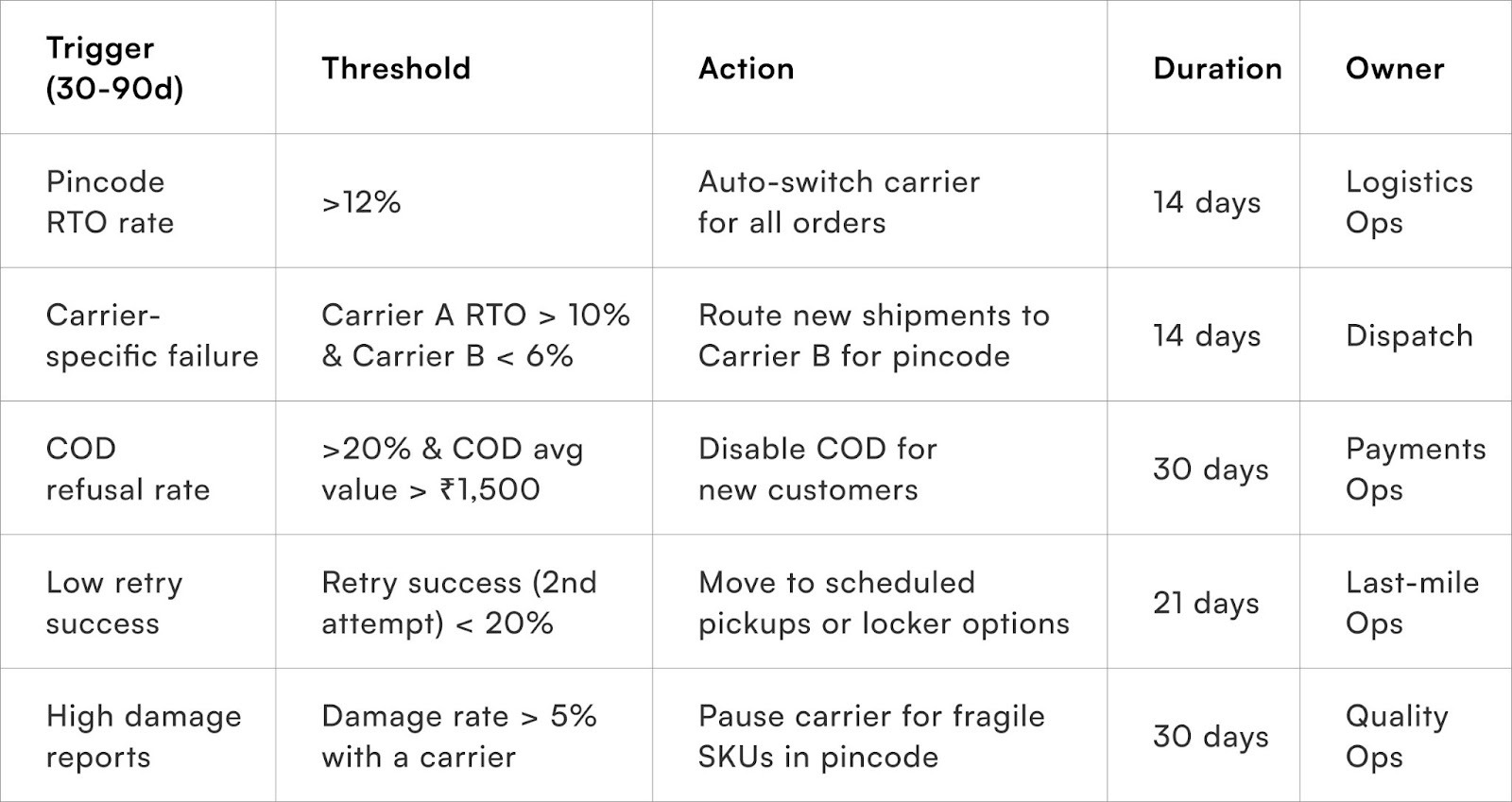
This table is intentionally conservative. Use it as a starting point and adjust thresholds based on your portfolio and margins.
How to combine pincode rules with cart profile and customer signals
Policies that consider both geography and the product/context are most effective
Pincodes don’t work in isolation. The same pincode that tolerates COD for low-value accessories might not for high-value electronics. Rules must therefore include cart profile: order value, SKU fragility, SKU dimensions, and customer history. For example, auto-switching carriers for fragile electronics in a high-damage pincode makes sense even if general RTO is low.
Customer signals matter too. Trusted repeat customers should see fewer restrictions. Use a simple trust score (orders delivered successfully in last 6 months) that exempts them from some pincode rules. This hybrid approach preserves experience for loyal customers while protecting margin against higher-risk cohorts.
How pincode mitigation interacts with delivery promises
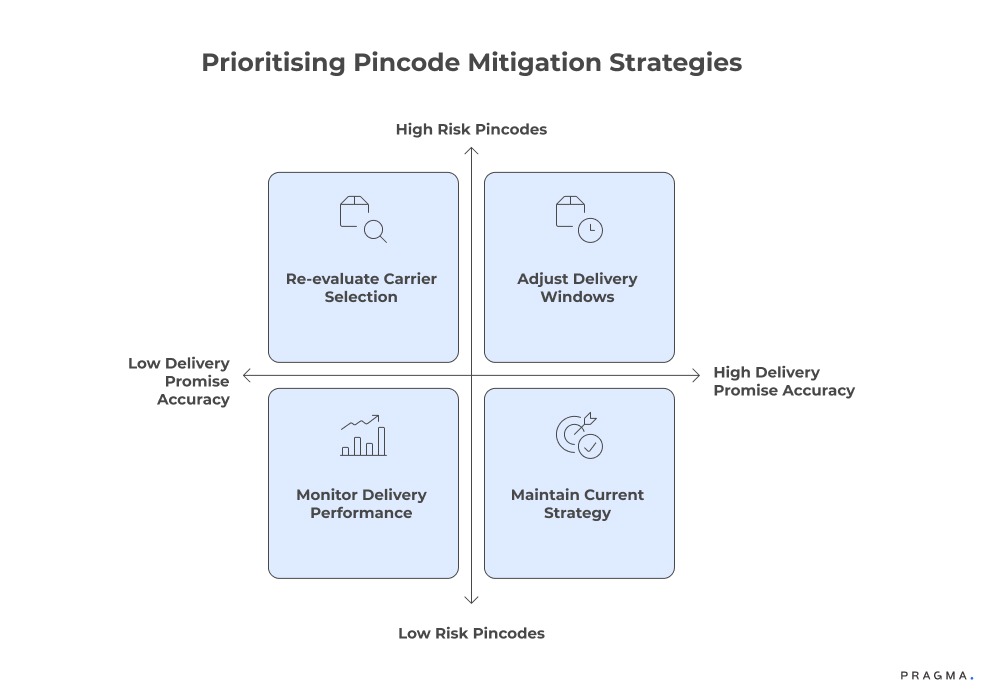
Most pincode mitigation strategies focus narrowly on RTO or COD risk, but delivery promise accuracy is an equally important lever. In high-risk pincodes, optimistic ETAs often trigger non-availability, refusals, or repeated rescheduling. Even when a carrier is technically serviceable, the promised timeline may not match on-ground reality.
Operationally, mitigation rules should adjust delivery windows alongside carrier selection. For example, if a pincode shows high failure on next-day delivery but stable success on 3–4 day windows, the checkout and dispatch system should automatically downgrade the promise. This reduces missed attempts and improves first-attempt success without changing the carrier at all.
Over time, brands that align pincode rules with realistic ETAs see fewer NDRs and lower CX escalations, even when shipping costs remain constant.
Operational process for deploying pincode rules safely
Deploy slowly, measure tightly, and keep humans in the loop
To safely implement carrier auto-switching or COD disabling rules at the pincode level, a phased approach is recommended:
1. Shadow Period and Evaluation:
- Start with a shadow period where the rules are evaluated without being enforced.
- Compare the simulated outcomes under the rules with the actual results.
- Proceed to the next phase only if the shadow run demonstrates a net benefit.
2. Pilot Implementation:
- Test the rule in a pilot scope, such as a single city or a specific subset of pin codes.
3. Go-Live and Stakeholder Management:
- When a rule goes live, notify all stakeholders: dispatchers, CX (Customer Experience), payments teams, and carrier partners.
- Ensure a clear rollback plan is in place.
- Set up a monitoring dashboard for key performance indicators (KPIs), including:
- RTO (Return to Origin)
- First-attempt success rate
- COD conversion rate
- Cost per delivery
- Automate alerts for any negative trends.
- Require human sign-off before expanding a rule beyond the initial pilot scope.
Governance: who owns pincode rules inside the organisation?
One of the biggest reasons pincode mitigation fails is unclear ownership. When logistics, CX, growth, and payments teams all influence rules independently, policies change frequently and inconsistently. This creates confusion both internally and for customers.
Best-performing teams assign single-point ownership of pincode rules to ops or supply chain leadership, with structured inputs from CX and growth. Rule changes follow a defined cadence, require documented justification, and include an expiry or review date. Emergency overrides are allowed, but logged and reviewed post-facto.
Governance turns pincode mitigation from ad-hoc firefighting into a stable operational capability.
Technology primitives you need
Minimal tech runway for effective enforcement and measurement
You don’t need a full ML stack to start. At minimum, you need a reliable data feed from OMS and courier reports, a small rules engine that can evaluate conditions per order, and a routing layer capable of assigning carriers dynamically. Logging and an audit trail are critical to explain decisions to CX and for regulatory compliance.
A lightweight tech stack typically includes a daily aggregated metric pipeline, a rules repository (YAML/DB), and an orchestration service that applies rules at dispatch time. Dashboards for monitoring and a simple interface for ops to toggle rules complete the loop.
Metrics to track and how to interpret them
Measure impact on both customer experience and unit economics
When implementing pincode-level mitigations, it's essential to track both operational and financial Key Performance Indicators (KPIs).
Primary Metrics:
- Return to Origin (RTO) rate
- First-attempt success rate
- Number of retries
- Cost per successful delivery
- Cash on Delivery (COD)-to-prepaid payment mix
Secondary Metrics:
- Customer complaints
- Refund Turnaround Time (TAT)
- Carrier Service Level Agreement (SLA) breaches
Analysis and Interpretation:
It is critical to segment these metrics by pincode, carrier, and cart profile to accurately identify areas of improvement.
Always interpret changes comprehensively. For instance, a drop in conversions caused by disabling COD might be a net positive if it results in higher realised revenue and a lower RTO rate. Conversely, if improvements in delivery KPIs lead to a sharp decline in conversion, it signals that your mitigation thresholds are likely too aggressive.
Using pincode mitigation to protect unit economics
Many brands underestimate how much margin is lost in high-risk pincodes through retries, reattempt fuel costs, and reverse logistics. Even when RTO rates appear manageable, the hidden cost per delivered order can exceed contribution margins for certain SKUs.
Pincode-level rules help surface this silently leaking margin. By tagging cost per successful delivery at the pincode level, ops teams can identify areas where delivery economics simply do not work for certain cart profiles. In such cases, mitigation should go beyond carrier switching and include payment gating, minimum order value enforcement, or slower fulfilment modes.
This ensures growth does not come at the cost of profitability, particularly during scale phases or discount-led acquisition periods.
Example decision flow (ops playbook)
An explicit flow helps ops teams act consistently
Start → Check pincode risk metrics → If RTO>threshold then check carrier performance → If alternate carrier outperforms, switch for matching SKUs → If no carrier is better but COD risk high, apply COD disablement for new customers → Notify CX and log reason → Monitor daily KPIs → Rollback if net harm observed.
Documenting a single canonical flow reduces debate during crises and makes escalations predictable and auditable.
Handling edge cases without breaking the rules engine
Every ops team faces edge cases: a loyal customer stuck in a restricted pincode, a high-value prepaid order where COD is disabled, or a bulk order flagged incorrectly. The mistake is handling these exceptions manually without learning from them.
Instead, exceptions should be categorised and logged. If the same exception appears repeatedly, it signals a missing rule or an overly aggressive threshold. Over time, many “exceptions” become formal exemptions — such as whitelisted customers, subscription orders, or corporate addresses.
This approach preserves rule integrity while ensuring flexibility does not erode discipline.
Preparing for seasonal volatility at the pincode level
Festivals, monsoons, and sale spikes change risk profiles
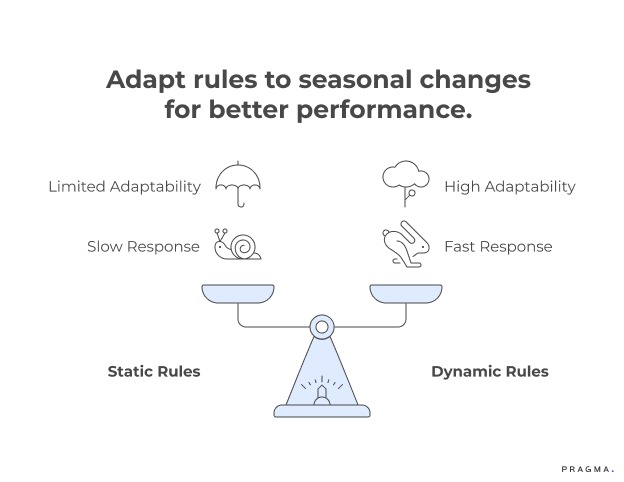
Pincode performance is not static. Festivals, weather events, infrastructure work, and even local elections can temporarily alter delivery success. Brands that lock rules year-round often struggle during these volatile periods.
A seasonal overlay on pincode mitigation works best. For example, during festive sales, thresholds for COD disablement may be tightened temporarily, while carrier switching windows are shortened for faster response. During monsoons, damage-prone pincodes may route fragile SKUs differently.
Proactive seasonal tuning prevents last-minute firefighting and protects both customer experience and fulfilment costs during peak demand.
Quick Wins
A short programme to get immediate control and measurable wins
Week 1 — Data hygiene and baselining
Export 90 days of pincode-level RTO, carrier performance, COD refusal rates, and damage reports. Clean and validate the data for gaps. Create a dashboard that ranks pin codes by risk and volume.
Expected outcome: Clear list of top 100 risky pincodes and the volume-at-risk.
Week 2 — Shadow rules and pilots
Define 3 conservative rules (auto-switch, disable COD for new customers, and move fragile SKUs to locker/drop-off) and run them in shadow for one week. Compare shadow outcomes with actual dispatches.
Expected outcome: Evidence that rules would have reduced RTO or costs without harming conversion materially.
Week 3 — Pilot live for a small cohort
Enable live rules for a manageable set of pincodes or a single city. Keep human oversight and ensure CX has templated messaging for impacted customers.
Expected outcome: Measurable reduction in RTO or damage in pilot area.
Week 4 — Review, optimise, and expand
Analyse pilot metrics, refine thresholds, document exceptions (trusted customers, subscriptions), and plan rollout to next set of pincodes.
Expected outcome: Ready playbook and validated thresholds for broader rollout.
Common pitfalls and how to avoid them
Practical warnings from teams who tried and failed first
A frequent mistake is setting thresholds too aggressively, causing conversion loss before benefits appear. To avoid this, always run shadow tests and start conservative. Another pitfall is poor communication: CX must be armed with consistent, customer-friendly explanations for disabled options.
Third, ignoring carrier relationships can backfire; sudden large volume switches without coordination may decrease performance. Finally, failing to track the right metrics creates false confidence — make sure your dashboard captures realised revenue and not just clicks.
To Wrap It Up
Pincode-level mitigation turns geography from a blind risk into a programmable control. By auto-switching carriers and selectively disabling COD where evidence demands it, brands reduce RTO, protect margins and make last mile performance predictable.
Immediate action this week: run a quick audit of your top 100 pin codes and flag those with 30-day RTO >12% or COD refusal >20% to start shadow testing mitigation rules.
Longer term, build an iterative programme: shadow tests → pilots → controlled rollout → monthly recalibration. Treat these rules as policies, not experiments — document them, own them and measure outcomes rigorously.
For D2C brands seeking operational control over pincode performance,Pragma’s Logistics Intelligence platform provides pincode analytics, carrier comparison and rule orchestration that help teams auto-switch carriers and manage COD policies with measurable impact.

FAQs (Frequently Asked Questions On Pincode-level mitigation: rules to auto-switch carriers or disable COD)
1. Will disabling COD in some pincodes hurt customer trust?
Disabling COD has a short-term trust cost, but when applied carefully — for new customers and high-risk pins — it prevents repeated failed deliveries that cause worse customer dissatisfaction. Always offer instant alternatives like UPI and explain the reason transparently at checkout.
2. How often should pincode thresholds be recalibrated?
Recalibrate monthly as courier coverage and local conditions fluctuate. After major events (festivals, monsoon) consider weekly checks for at least one month to catch rapid shifts.
3. Can auto-switching carriers worsen relationships with partners?
It can if done abruptly. Share plans with carrier partners, run coordinated pilots, and avoid moving all high-volume lanes at once. Better to reward good performing carriers with more volume than to punish poor ones overnight.
4. Should loyal customers be exempt from pincode rules?
Yes. Trusted repeat customers with a clean delivery history should be exempt from some mitigations, particularly COD disablement. Use a simple trust threshold to automate exemptions.
5. How do we communicate COD disablement at checkout?
Use a brief, empathetic copy: “We’ve adjusted payment options in your area to ensure faster delivery. We accept UPI, cards and wallets for a smoother experience.” Provide help links and an option to request COD via call for exceptional cases.
6. What is a safe minimal duration for rule enforcement?
Start with 14–30 day windows for most rules. This gives enough time to observe effects without entraining permanent change from short-term anomalies.
7. How should we handle fragile or bulky SKUs?
Treat fragility as an additional risk multiplier. In high-damage pincodes, route fragile SKUs only to trusted carriers or use locker/drop-off options; consider disabling COD for such SKUs in those pincodes.
8. What human oversight is necessary when rules are live?
A small control room — logistics ops, CX lead, and a product manager — should review daily dashboards during rollout and be empowered to pause or rollback rules if harm appears.
Talk to our experts for a customised solution that can maximise your sales funnel
Book a demo

.png)