

Returns are a part of e-commerce. Overall, India has an average return rate of 15%–25%, which reaches to 40% in the fashion industry.
These numbers show how common returns have become in e-commerce. The next challenge is deciding what happens after a customer requests a return.
Should e-commerce brands issue a refund and return the money?
Or should they offer store credit and keep the revenue inside their business?
For D2C brands, this decision affects their revenue retention, customer lifetime value, return costs, repeat purchases, and profitability.
And the answer is not the same for every brand.
Product category, customer expectations, return reasons, and retention strategy all influence the right selection between store credit vs refunds.
So let us check" Store Credit vs Refunds: Which Is Better for E-commerce?", while discussing their benefits, challenges, and how D2C brands use both to protect their margins while maintaining customer trust.
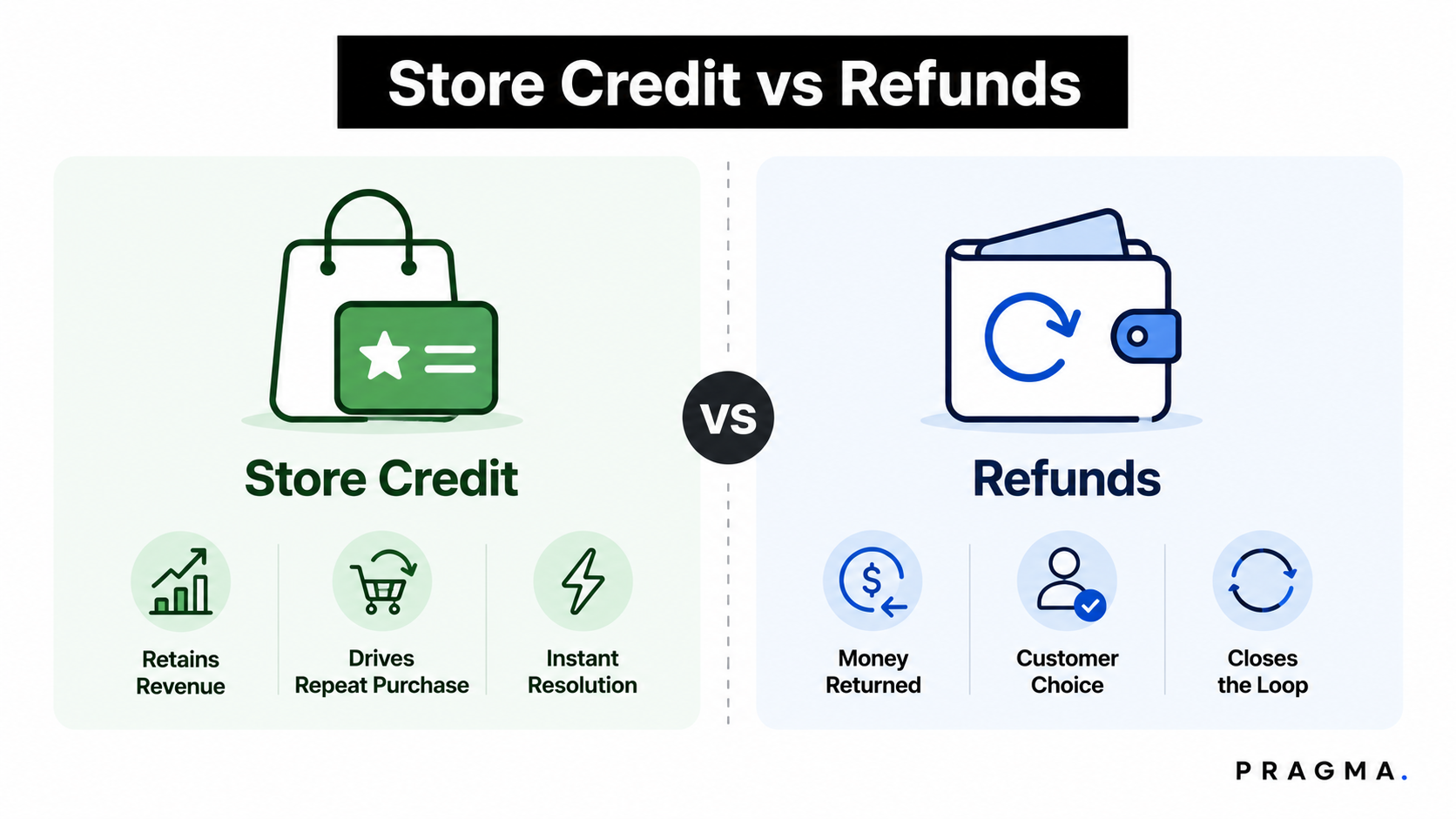
What Is Store Credit in E-commerce?
Store credit is a non-cash refund issued to customers after a return.
Instead of receiving money back to their original payment method, customers receive credit that they spend on future purchases from the same brand.
For example:
A customer returns a ₹2,000 t-shirt. The brand issues ₹2,000 in their wallet as points or credits.
The customer uses the credit to purchase another product later.
Brands issue store credit in several forms:
- Account balance tied to the customer profile
- Digital gift card or voucher code
- Discount code for a fixed amount
- Loyalty credit linked to a rewards program
This keeps revenue within the brand because no cash is given back to the customer. Yet, they get the purchasing power to buy products from the same brand at any time later.
What Is a Refund in E-commerce?
A refund in e-commerce refers to an action in which the brand returns the customer's money after a successful return initiated by the customer.
The amount goes back to the customer's original payment method, such as a credit card, debit card, UPI account, or wallet.
The refund process works like this:
- The customer submits a return request
- E-commerce brands inspect the item or approve the request
- They process the refund through your payment gateway
- The customer receives the money within 5 to 10 business days
Refunds are often viewed as the safest option from a customer perspective because they remove purchase risk.
Research from the National Retail Federation shows that 76% of consumers consider free returns important when deciding where to shop online.
And a negative return experience discourages 67% of shoppers from buying from the same retailer again.
That is why it is important to have powerful return management systems like Pragma RMS that easily handle all the return operations by supporting both refunds and exchanges.
Store Credit vs Refunds: Key Differences
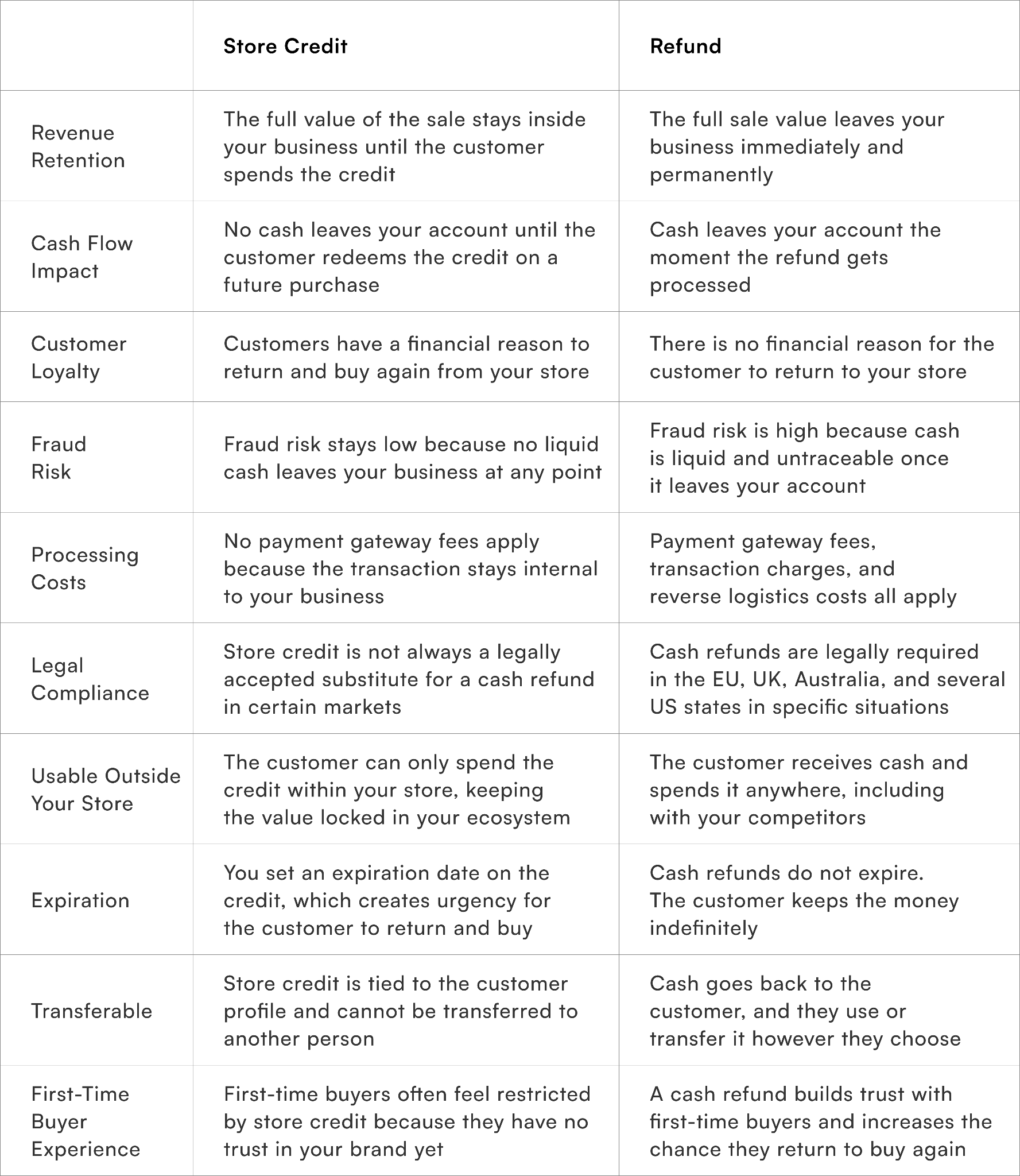
The major difference between store credit and refunds is in the cash flow. As discussed, in return, money is refunded to the customer to their source of payment method, whereas points or credits are given in case of store credits, which can be redeemed later.
But this just does not differentiate store credit vs refunds; there are also some important metrics that are related to this. Have a look at the following table to understand the same.
Benefits of Store Credit for E-commerce Brands
Store credits come with both benefits and challenges to e-commerce brands. Let us see how they work in favour of e-commerce brands in India:
Revenue Retention
Every refund removes revenue from the business. But the store credit keeps the value inside your business.
This becomes important because returns are growing rapidly across e-commerce.
According to NRF, retailers expect nearly 15.8% of annual sales to be returned in 2025. Total returns are projected to reach nearly $850 billion.
When a large portion of returns converts into store credit, brands retain more revenue and protect margins.
Also, PwC's Global Consumer Insights Survey shows nearly 45% of issued store credit goes unredeemed. It means that almost half of the credit brands issued never result in a cash outflow. And they retain that revenue entirely.
Pragma RMS helps brands reduce revenue leakage through exchange-first journeys and instant store credit issuance.
Encourages Repeat Purchases
Store credit creates a reason for customers to purchase again.
Instead of ending the relationship, the return becomes another shopping opportunity.
Recent e-commerce retention studies show that the average e-commerce store converts only about 28% of customers into repeat buyers.
Store credit increases the likelihood of another purchase because customers already have value waiting in their accounts.
Improves Customer Lifetime Value (CLV)
Customer acquisition costs continue to rise across D2C e-commerce.
Increasing customer lifetime value often produces stronger profitability than acquiring additional customers.
Repeat customers spend more and purchase more frequently than first-time buyers. Research from the National Retail Federation shows customers who receive store credit are 20% more likely to make a repeat purchase compared to those who receive cash refunds.
Thus, store credit supports retention and contributes to higher long-term customer value.
Reduces Refund Processing Costs
Refunds require payment gateway processing, finance reconciliation, customer support coordination, and transaction management.
Statista's e-commerce data shows the average cost of processing a return in e-commerce ranges between 20% and 65% of the original product price.
Store credit eliminates many of these costs, and the process becomes faster and simpler for operations teams.
Helps Reduce Return Fraud
Return fraud continues to grow across e-commerce. Customers buy items, use them, and return them for cash. This practice is called wardrobing, and it is especially common in fashion.
The NRF reports that 9% of all returns are fraudulent, and 93% of retailers consider return fraud a significant business challenge.
But with the help of store credit limits, the ability of fraudsters to extract cash from the business is limited.
Many Indian D2C brands use store credit for higher-risk return categories because of this advantage.
Challenges of Store Credit For E-commerce Brands
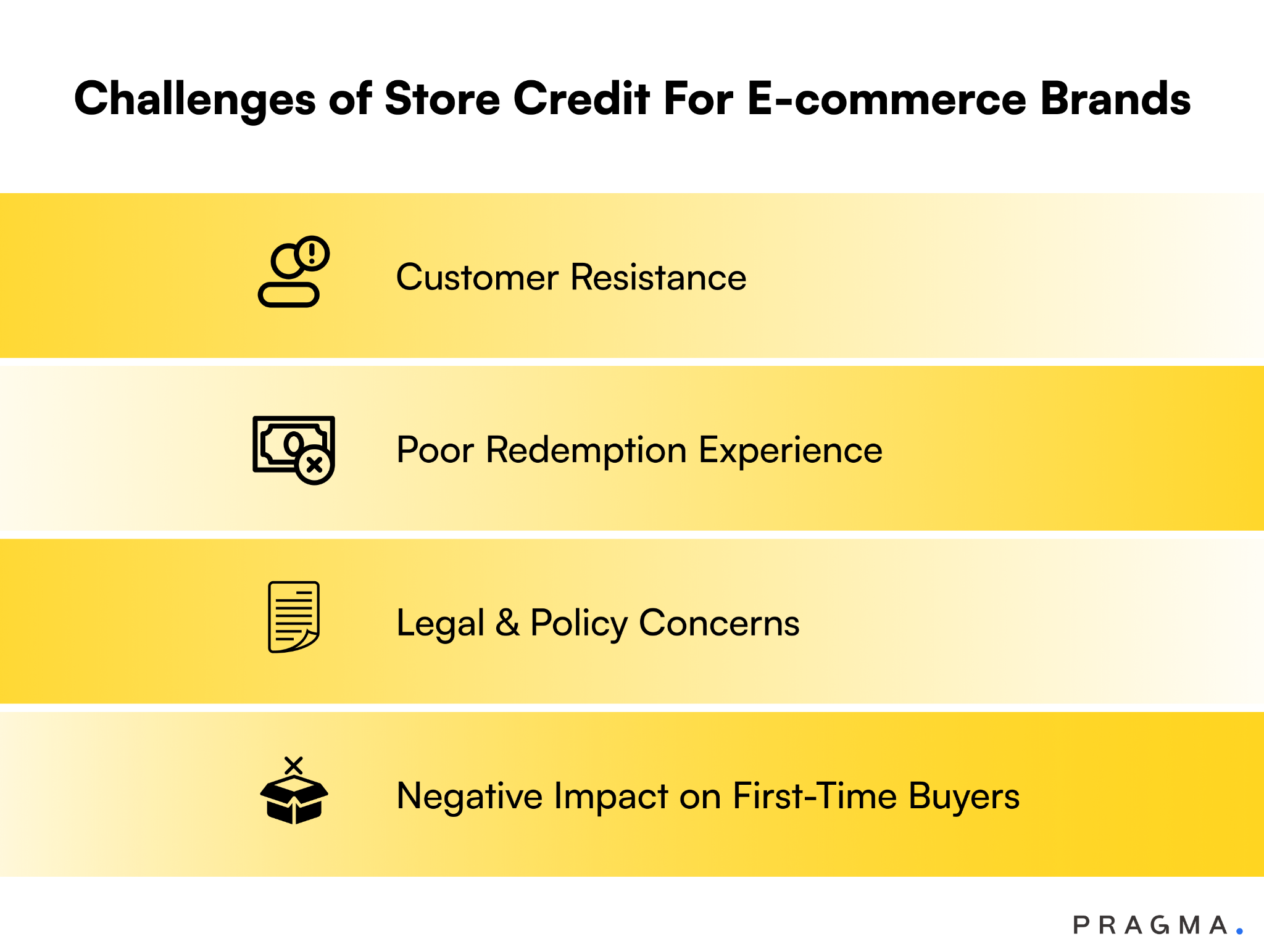
As we have seen, store credit provides numerous advantages to businesses, but they also come with the following challenges that negatively affect the e-commerce brands:
Customer Resistance
Many customers prefer receiving money back.
If store credit feels restrictive, customers may become frustrated, as forcing store credit on a dissatisfied customer damages the relationship permanently.
This is especially true when the policy is not clearly communicated before purchase.
That is why every e-commerce brand should communicate the benefits clearly and offer incentives for choosing credit over a refund.
Poor Redemption Experience
When store credit is difficult to apply at checkout, customers will not use it. They will contact support, get frustrated, and demand a refund instead.
The redemption experience must be seamless.
Credit should appear automatically at checkout. Customers should not need to enter codes or call support to use their balance.
Legal & Policy Concerns
Different regions have different consumer protection requirements.
Brands should ensure store credit policies remain transparent and compliant with local regulations.
Some of the rules say to give customers a refund or replacement for defective products, and offering only store credit during legally mandated refund periods violates consumer protection law.
Negative Impact on First-Time Buyers
A first-time customer who returns a product and receives store credit instead of a refund often feels trapped.
PwC's Consumer Insights Survey found that 32% of customers will stop buying from a brand they love after one bad experience. Issuing store credit to a first-time buyer who expects a refund is exactly that kind of bad experience.
That is why brands should offer cash refunds to new customers on their first return, as it is important to build trust before getting retention.
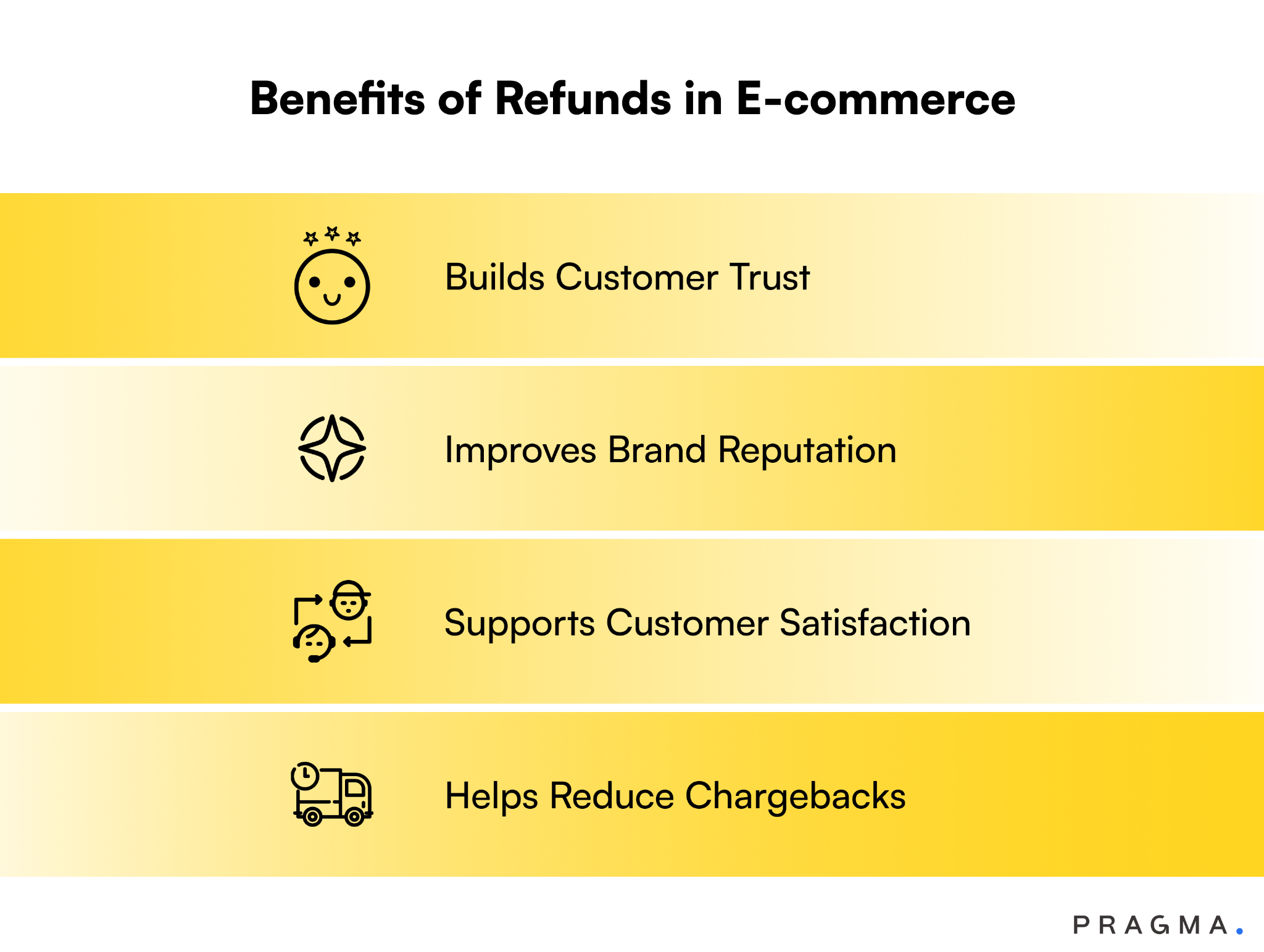
Benefits of Refunds in E-commerce
Now, let us see how refunds can be beneficial for e-commerce brands:
Builds Customer Trust
Invesp research shows 67% of shoppers check the returns page before making a purchase.
And mentioning refunds reduces the purchase risk.
Customers know they will recover their money if the product does not meet expectations. This trust influences the buying decisions of customers.
Improves Brand Reputation
Easy refunds create positive customer experiences. Forbes research on e-commerce return policies confirms that a positive return experience increases the likelihood of a customer recommending the brand by up to 96%.
Customers often share experiences through reviews, social media, and word-of-mouth recommendations.
Thus, a smooth refund process can support long-term good brand perception.
Supports Customer Satisfaction
When a product is defective, damaged, or wrong, a refund is the appropriate response.
Because during this situation, the customer is already dissatisfied, it is the duty of the brand to turn this dissatisfaction into satisfaction by giving them faster refunds.
This is what the Pragma Return Management System works for. It helps in making easy returns by providing branded return portals, where your customers can easily initiate a return and get refunds for the same.
Helps Reduce Chargebacks
A chargeback happens when a customer disputes a transaction with their bank instead of requesting a return from you.
Chargebacks are expensive. They come with fees, administrative work, and potential account penalties from payment processors.
PayCompass chargeback data shows the average chargeback value increases by 20% to 30% in the post-holiday period.
That is why a straightforward refund process gives customers a direct path to resolution and keeps them away from the chargeback route.
Challenges of Refunds for E-commerce Brands
Although refunds may seem beneficial for customers or somehow for businesses, they bring up the following challenges:
Revenue Leakage
Every refund is a complete revenue loss because the entire money earned is given back to the customer.
Many times the product comes back, often in a condition that reduces its resale value or cannot be sold again.
For D2C brands operating on thin margins, this is a serious problem because they lose money along with the product loss.
Statista's global return rate data shows that the average e-commerce return rates worldwide are between 20% and 40%, depending on product categories. At that volume, refunds represent a significant and ongoing drain on revenue.
High Reverse Logistics Costs
Processing a return is not free. Brands have to pay:
- Shipping costs
- Reverse logistics costs
- Inspection costs
- Repackaging costs
- Customer support costs
Each return costs Indian brands approximately ₹150–₹300 in direct reverse logistics expenses.
Pragma's return management system reduces these costs by automating the return workflow, generating return labels, and tracking the status of every return in one dashboard.
Refund Fraud
Refund fraud is a growing problem. Customers claim items never arrived, return empty boxes, or send back different products.
The NRF's 2024 returns report found that for every $100/ Rs. 9,514.74 in returned merchandise accepted by retailers, they lose $10.40/ ₹990 to return fraud.
During the holiday season, 16.5% of all returns are fraudulent.
Cash refunds are the primary target for this type of fraud because the money is liquid and untraceable once it leaves your account.
Operational Burden
Refunds create workload across multiple teams. Finance, customer support, warehouse operations, and logistics teams all become involved.
McKinsey's research on the returns problem found returns management consumes between 20% and 65% of the item's original value when all costs are factored in.
Automation is the only way to bring that number down. Features like centralising return workflows, approval logic, courier tracking, and refund visibility help brands reduce operational complexity.
When Should E-commerce Brands Offer Store Credit?
Here are some cases, at that time, e-commerce brands should offer store credits to the customers:
Change-of-Mind Returns
There may be cases when a customer ordered a product, received it, and decided they did not want it and returns the product. Nothing is wrong with the product.
When this is the case, where there is no defect in the product or no other issues, the company at that time should offer store credits to the customer instead of money.
Because your product is as described. So, giving them credit is a fair solution.
Size or Preference Issues
When a customer ordered an item from your brand, maybe it is possible that he did not like the colour or the size did not fit him well.
At that time, store credits or an exchange option will be a good option. With this, the customer will get their solution, and you will not lose all your sales.
That is why it is essential to have a return management system that supports both store credits, exchanges, and refunds.
Pragma's return management system allows brands to offer instant exchanges alongside store credit. When a customer returns a shirt for being too small, the system automatically suggests the next size up, converting a potential refund into an exchange.
Sale or Clearance Items
When a brand is running a sale or clearing the old stock, they prefer to offer store credit instead of refunds on discounted inventory.
This practice helps to protect margins while maintaining customer flexibility.
When Should E-commerce Brands Offer Refunds?
Refunds make more sense when the brand is responsible for the issue.
These are some of the cases where it is essential to make refunds:
- When customers have received damaged products
- When the wrong products are delivered to the customer
- At the time of shipping failures from the brand
- When there are product quality issues, or an item is not matched to the description as provided
- When there are offences against the regulatory requirements
Providing refunds in these situations strengthens trust and protects brand reputation.
Also, new customers on their first return should receive a cash refund. They have no relationship with your brand yet. Store credit feels restrictive and damages the relationship before it starts.
Hybrid Strategy: Combining Store Credit and Refunds
The most effective approach for D2C brands is not choosing one option exclusively.
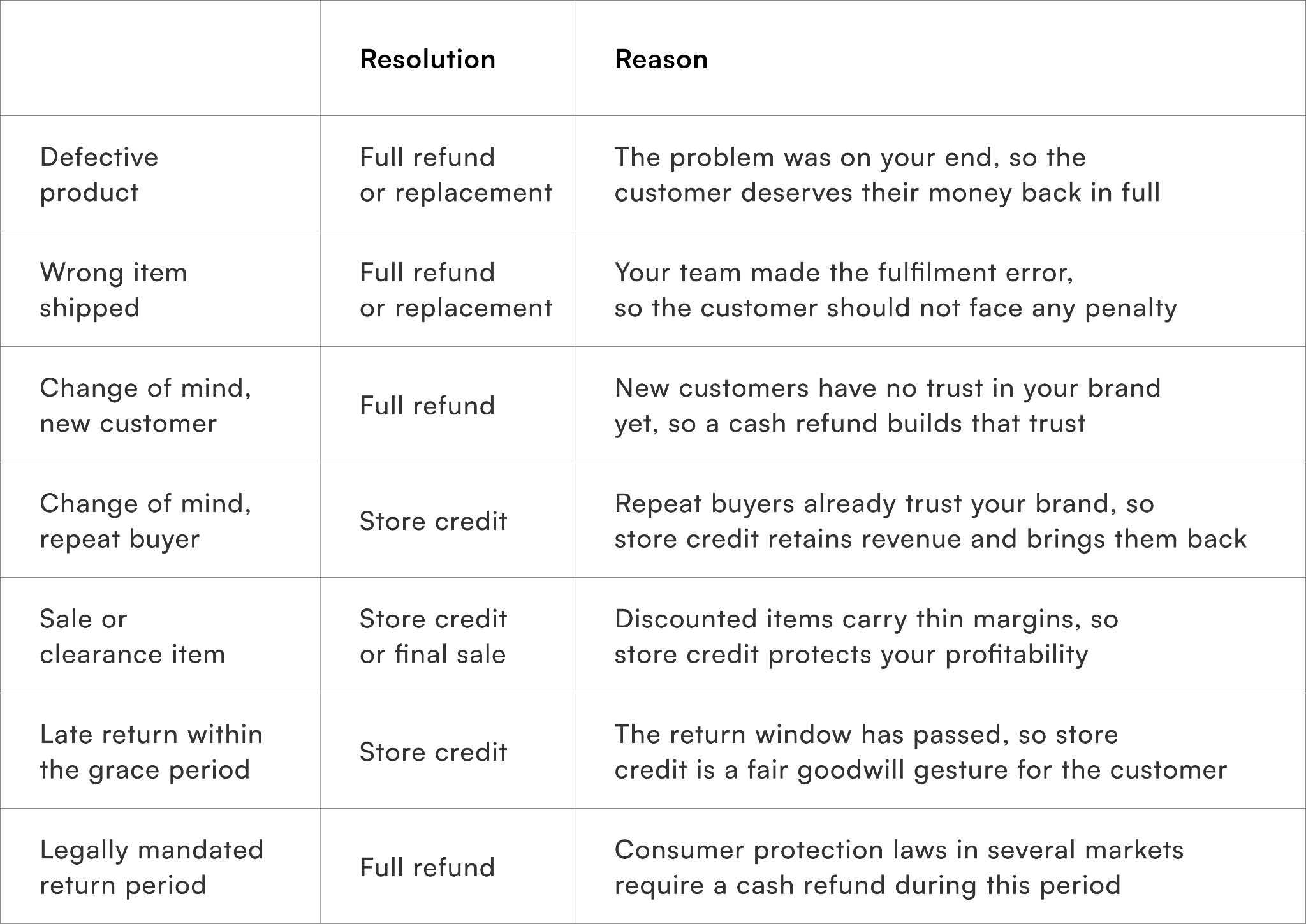
E-commerce brands should work on an approach that provides the right solution to every return and should be good for them, too.
Have a look at the following table and get a clear insight into choosing between store credits vs refunds:
How Indian E-commerce Brands Use Store Credit Strategically?
Leading D2C brands increasingly use store credit as part of their retention strategy rather than viewing returns as a loss.
Common approaches include:
- Instant credit after return approval
- Bonus store credit incentives
- Exchange-first return journeys
- Loyalty rewards linked to returns
- Personalised return policies based on customer history
The goal of every e-commerce brand should be simple. Reduce revenue leakage while maintaining a strong customer experience.
When supported by automation and data, store credit becomes a retention tool rather than a customer service compromise.
Store Credit vs Refunds: Which Is Better?
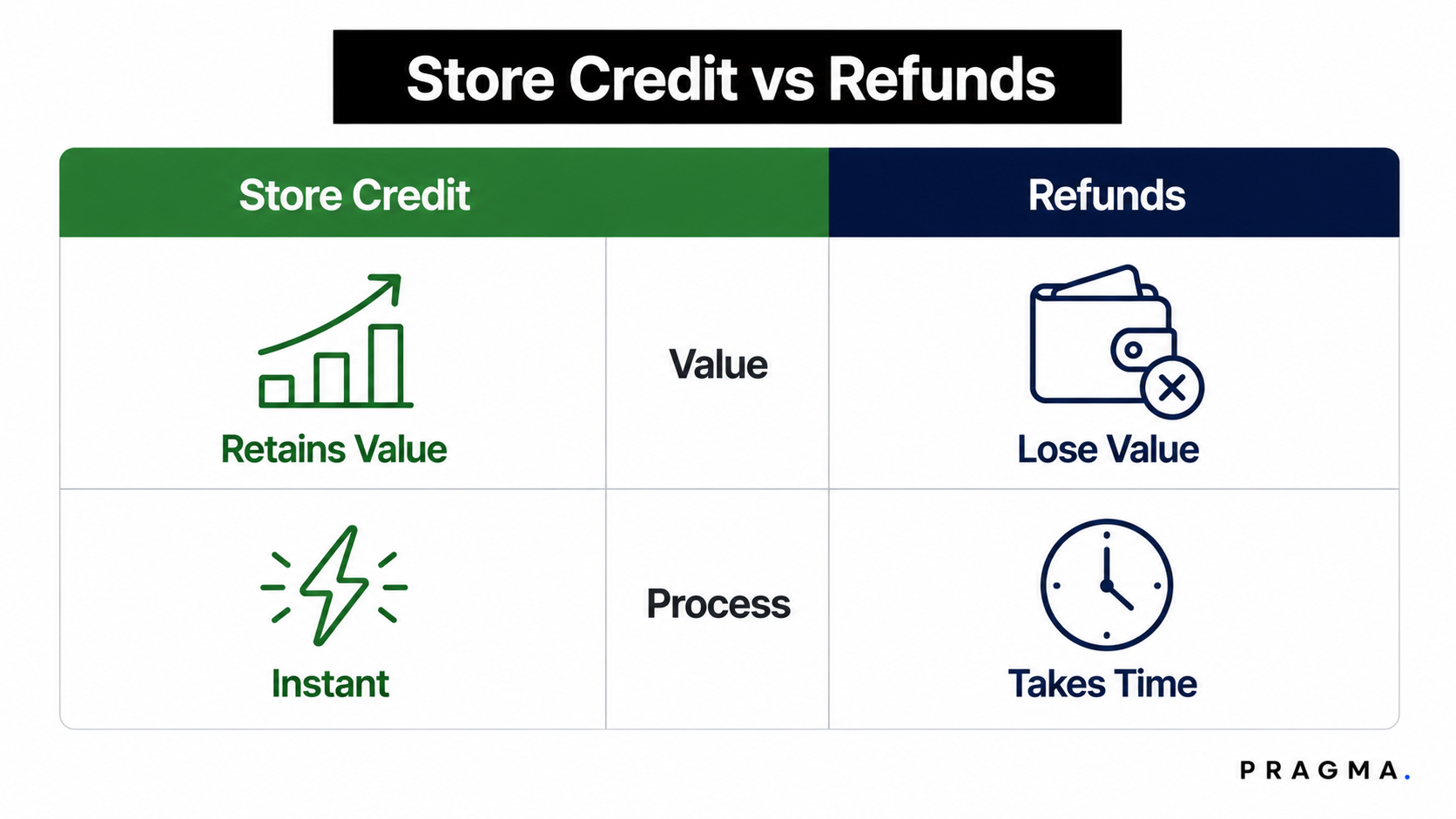
So, to conclude here, let us make the final verdict on store credit vs refunds.
Store credit and refunds solve different business problems.
Store credit supports revenue retention, repeat purchases, customer lifetime value, and fraud prevention. Refunds support trust, customer satisfaction, and brand reputation.
The choice between store credit vs refunds depends on your return reasons, customer expectations, and retention goals.
What D2C brands should do is to combine both approaches using clear policies and automated workflows.
As return volumes continue to rise across e-commerce, brands need visibility into return reasons, refund costs, exchange rates, and customer behaviour.
Pragma RMS helps D2C brands manage returns, exchanges, store credit, refunds, and reverse logistics through a unified platform.

FAQs (Frequently Asked Questions On Store Credit vs Refunds: Which Is Better for E-commerce?)
1. What is the difference between store credit and refunds in eCommerce?
Store credit allows customers to use the returned order value for future purchases from the same brand, while refunds return the original payment amount to the customer.
2. Is store credit better than refunds for eCommerce brands?
Store credit is often better for eCommerce brands because it retains revenue within the business, reduces refund-related losses, and encourages repeat purchases. However, refunds remain essential for maintaining customer trust and meeting return policy expectations.
3. What are the advantages of offering store credit in eCommerce?
The advantages of store credit include improved customer retention, higher repeat purchase rates, lower cash outflow, and the opportunity to recover revenue that would otherwise be lost through refunds.
4. What are the disadvantages of store credit for customers?
The main disadvantage of store credit is that customers cannot receive their money back and may feel restricted to purchasing again from the same brand if alternatives like refunds are unavailable.
5. When should eCommerce brands offer refunds instead of store credit?
Brands should offer refunds when products are defective, incorrectly delivered, or when customer expectations and return policies require a monetary reimbursement.
6. How does store credit impact eCommerce profitability?
Store credit improves profitability by reducing immediate cash outflow, retaining revenue, increasing customer lifetime value, and creating opportunities for future purchases.
7. Can store credit increase customer retention?
Yes, store credit can increase customer retention by encouraging customers to return to the brand, explore additional products, and continue their shopping journey.
8. How can eCommerce brands encourage customers to choose store credit?
Brands can encourage store credit adoption by offering additional credit value, faster processing, seamless redemption experiences, and clear communication of the benefits compared to traditional refunds.
9. What tools help manage store credit and refunds in eCommerce?
Tools include return management systems, customer communication platforms, CRM systems, and automation solutions that streamline return requests, approvals, and refund or credit workflows.
10. Should D2C brands in India prioritise store credit over refunds?
D2C brands in India can prioritise store credit in suitable scenarios because it helps improve retention and profitability. However, a balanced return policy offering both store credit and refunds usually creates the best customer experience.
Talk to our experts for a customised solution that can maximise your sales funnel
Book a demo


.png)